






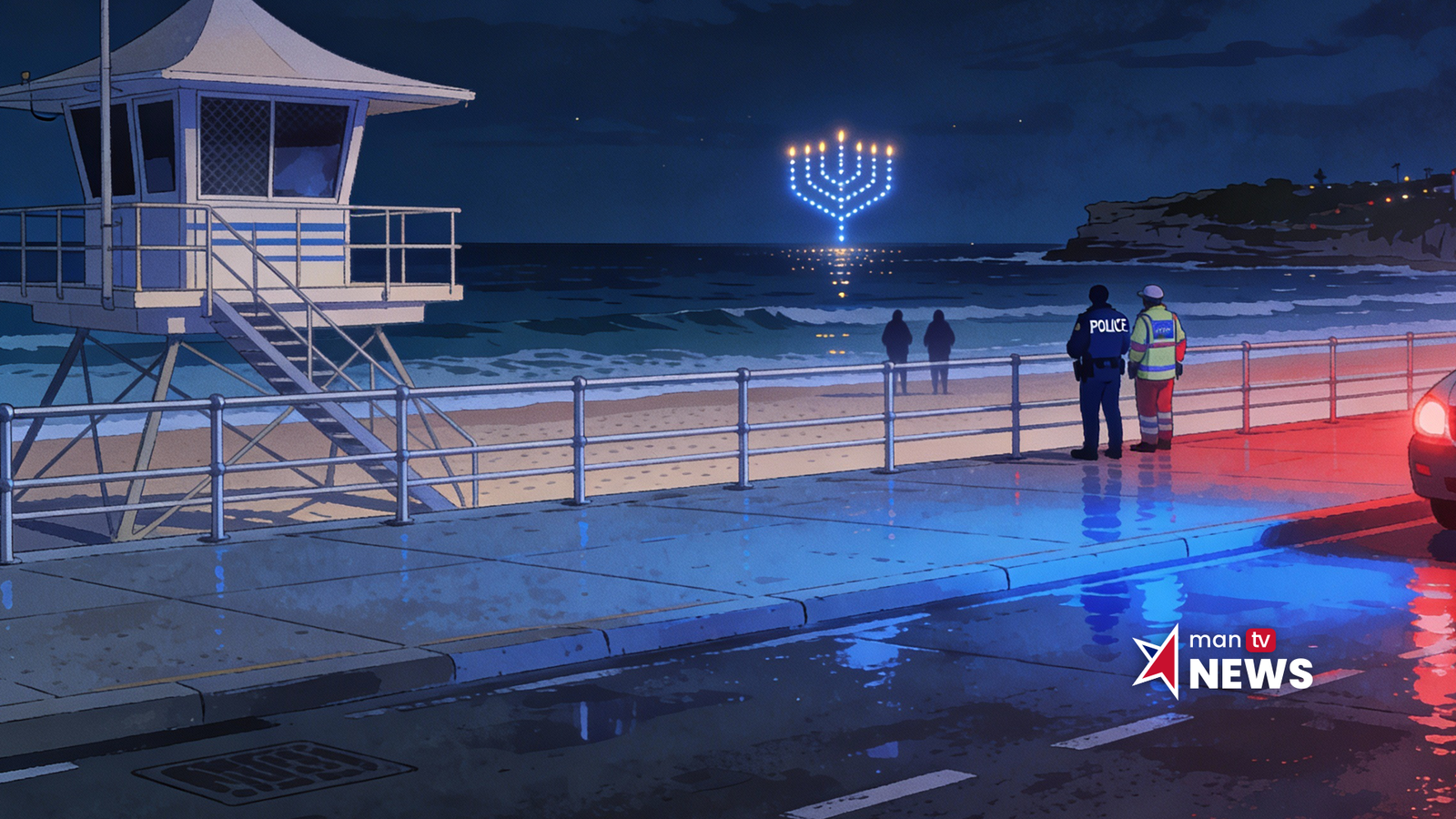
Bondi Beach Hanukkah Terror: Will This Darkest Night Unite or Divide Australia’s Multicultural Future?
Australia needs a calm, united, and principled response to the Bondi Beach Hanukkah terror attack: grieving with the victims, protecting Jewish communities, resisting any backlash against wider communities, and strengthening security and social cohesion at the same time. This is also a test for the media and political leaders, whose words and behaviour in the coming days will help decide whether this becomes a moment of division or a turning point toward a more resilient, peaceful multicultural Australia.
The moment Australia is in
The Bondi Beach shooting is now recognised as Australia’s deadliest terror incident and the worst mass shooting since Port Arthur, with at least 16 people killed and dozens injured at a Jewish Hanukkah celebration. Authorities have declared it a terrorist attack with antisemitic motives, and Jewish communities across the country are reporting shock, fear and renewed concerns about safety at religious and cultural events.
Like Port Arthur and the Cronulla riots, this attack will sit in the national memory as a defining moment that forces a reckoning with questions of hate, security, and what kind of country Australia wants to be. International coverage has already framed the attack as a test of Australia’s multicultural model, in a global context where democracies from the United States to France and the United Kingdom are struggling with repeated terror incidents and community polarisation.
How people should respond
Ordinary Australians now carry a dual responsibility: to stand visibly with the victims and Jewish communities, and to reject both antisemitism and any retaliatory hatred toward Muslim, Arab or other minority communities. Community vigils, interfaith events and respectful public statements from local leaders can send a clear message that the country’s response will be empathy and solidarity, not suspicion and scapegoating.
At the same time, the public can help keep the country safe without fuelling panic by reporting credible threats, challenging hate speech in their own circles, and being careful about sharing unverified rumours or inflammatory social media content that extremists often rely on to amplify fear. In countries such as the UK and France, experience shows that communities that stay engaged, informed and united – rather than retreating into fear – are better able to resist the long-term social damage terrorists seek.
Media’s duty after a terror attack
Around the world, research shows that the way terrorism is reported can massively increase or reduce the impact of an attack, sometimes giving extremists far more attention than the violence itself. Responsible media coverage means reporting facts quickly and accurately, avoiding sensational images and language, and refusing to amplify propaganda, manifestos or unverified claims that give attackers the fame or platform they often seek.
For Australian outlets, including multicultural platforms like MAN TV, this is a moment to prioritise: accurate casualty and security information; clear explanations of what is known and not yet known; context about antisemitism and far‑right or extremist ideologies; and strong editorial lines against hate speech in comment sections and talkback formats. Lessons from the Cronulla riots show that careless media framing and inflammatory talkback rhetoric can fuel racism and street violence, while careful, community‑informed reporting can instead build understanding and defuse tensions.
What political leaders must do
In the immediate term, national and state leaders must give clear, non‑partisan reassurance: condemning the attack as an assault on Jewish Australians and on the whole nation, outlining concrete security steps, and committing to protect all communities equally. Global experience from cities such as London and Paris shows that mixed messages, culture‑war language or attempts to score political points in the wake of terror incidents deepen division and can undermine trust in security agencies.
Over the medium term, Australian politicians will be judged on whether they match tough counter‑terrorism measures with investment in social cohesion, anti‑racism, and community‑based prevention programs, rather than relying solely on policing and surveillance. Experts on the Cronulla riots, for example, argue that sustained engagement, respectful listening and cross‑cultural initiatives helped rebuild trust after 2005, offering a model for proactive leadership instead of reactive blame.
Social ideals to move forward
This attack challenges Australia to recommit to a practical version of multiculturalism that means more than slogans – one where Jewish Australians can celebrate Hanukkah in safety, Muslims can attend mosque without fear, and difference is seen as part of a shared civic identity, not a threat. A mature response would elevate core ideals: zero tolerance for antisemitism and all forms of racism, protection of freedom of religion, and a shared understanding that collective security depends on the dignity and safety of every community.
Internationally, countries that have weathered repeated terror attacks without fully fracturing – such as Norway after the Breivik massacre, or the UK after attacks in London and Manchester – have emphasised the rule of law, human rights and democratic accountability as non‑negotiable values even under pressure. For Australia, that means resisting calls for blanket suspicion of migrants or particular faith groups, while being honest about the reality of violent extremism and the need for targeted, evidence‑based interventions.
Preventing the next incident: key focus areas
Experts in terrorism and social conflict argue that prevention starts long before an attack, in the places where people live, work, worship and spend time online. For Australia, the Bondi attack highlights several “micro focuses” that need urgent attention: community intelligence and trust in police; monitoring and disrupting online radicalisation and hate networks; securing major events and soft targets; and improving mental‑health and exit pathways for people drifting toward violent extremism.
The Cronulla riots showed how alcohol, organised extremists and local grievances can mix suddenly into violence, while Port Arthur led to sweeping gun reforms that dramatically reduced mass shootings. In the same way, Bondi should trigger a serious, independent national review into security at religious and community events, the handling of antisemitic and racist threats, and coordination between federal and state agencies, modelled on inquiries undertaken in other democracies after major attacks.
How other democracies have faced terror
When comparing Australia with other developed countries, a clear pattern emerges: countries that combine firm security responses with inclusive, rights‑based politics tend to recover faster and avoid spirals of revenge and repression. After the 2011 Utøya massacre, Norway’s leaders insisted on “more democracy, more openness” rather than a turn to authoritarianism, while the UK, France and Germany have each wrestled with striking a balance between powerful security laws and protections for civil liberties.
Australia’s relative rarity of mass shootings since Port Arthur shows that decisive policy – such as gun law reform – can work when matched with public support. The Bondi Beach attack now places Australia in a global conversation about how democracies tackle terrorism without losing their character, and whether this country will respond with fear and division, or with renewed commitment to peace, justice and genuinely lived multiculturalism.


 English