





Bondi Beach Chanukah Massacre: Australia’s Deadliest Terror Attack in 30 Years Echoes the Horror of Port Arthur. But Is This an Isolated Incident?
Sixteen people are confirmed dead and dozens more injured after a terror attack on a Jewish Chanukah celebration at Bondi Beach, in what authorities describe as Australia’s worst mass shooting in roughly three decades and a deliberate antisemitic attack. Police say the incident is being treated as a terrorist act, with a 50‑year‑old father and his 24‑year‑old son identified as the alleged attackers.
A night of horror at Bondi
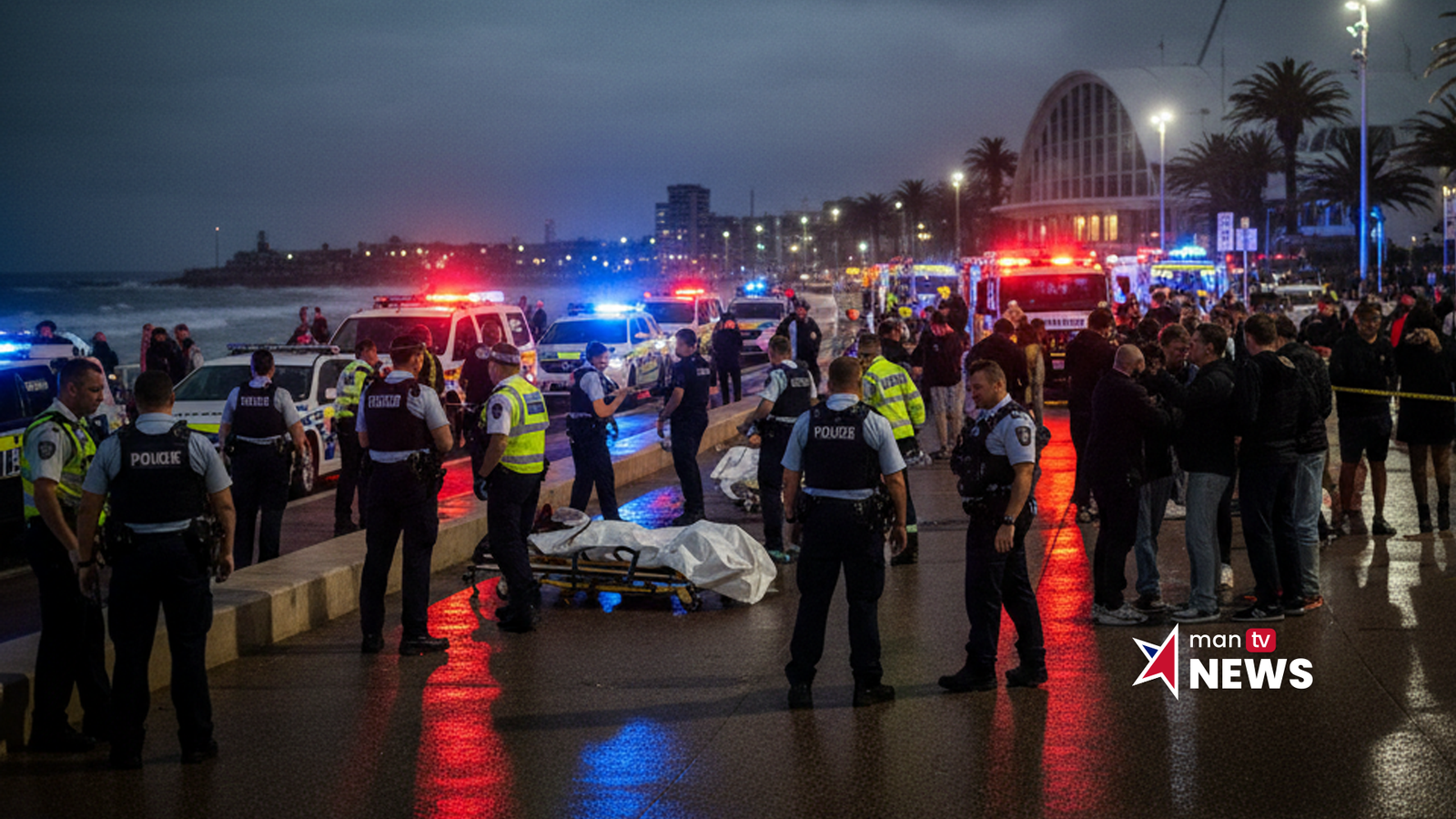
On the evening of Sunday 14 December 2025, what began as a joyful public Chanukah event at Sydney’s Bondi Beach was transformed into a scene of chaos and carnage when two men armed with multiple firearms opened fire on the crowd. Witnesses describe families fleeing across the sand and nearby streets as shots rang out for several minutes, with parents shielding children and bystanders dragging the wounded to safety.
NSW Ambulance received the first call at 6:43pm, with paramedics arriving within minutes and ultimately deploying more than 120 personnel to the scene, supported by a large NSW Police presence. Crews treated victims in so‑called “hot zones” under police protection, transporting 24 patients in the first wave and ultimately seeing 42 people present at hospitals across Sydney.
The attackers and the police response
NSW Police have confirmed that the attackers were a 50‑year‑old man and his 24‑year‑old son, both from Bonnyrigg, who had been staying at an address in Campsie in the lead‑up to the attack. The older man, a licensed firearms owner with six registered guns, was shot dead at the scene, while his son remains in hospital in a critical but stable condition under police guard.
Police say they are not searching for any additional gunmen and believe the father and son acted together in the Bondi attack, though investigators are still examining whether any other individuals assisted or knew of the plan. Two search warrants were executed overnight at Bonnyrigg and Campsie, and forensic work is underway to match the six seized firearms to the weapons used in the attack.
Terrorism, antisemitism and motive
NSW Police Commissioner Mal Lanyon formally declared the incident a terrorist act at 9:36pm, triggering a joint counter‑terrorism operation codenamed Operation Arques with federal agencies. Authorities say the attack clearly targeted the Jewish community on the first night of Chanukah, with the Prime Minister bluntly calling it “an act of pure evil, an act of antisemitism, an act of terrorism on our shores.”
Investigators are still probing the attackers’ ideology, possible overseas links and whether any extremist symbols or manifestos were involved, but have declined to confirm reports of an ISIS‑style flag or other specific indicators while the investigation is active. Officials have confirmed that there was only “limited knowledge” of the two men before the shooting, and that there was no prior intelligence suggesting they were about to carry out an attack.
The human toll and Australia’s worst mass shooting in decades
Authorities now say 16 people have been killed, including 15 innocent victims aged from 10 to 87 and one of the attackers, making it the deadliest mass shooting in Australia in around 30 years. Among the dead are members of the Jewish community, at least one child and reportedly two police officers, while dozens more are being treated for gunshot wounds and other injuries in hospitals across New South Wales.
This toll surpasses any gun attack in Australia since the 1996 Port Arthur massacre, underscoring the profound shock to a country that has long pointed to its strict firearms regime as a global model. Hospital staff have described extraordinary scenes as emergency departments rapidly activated major incident plans, while blood services have appealed for donors to help support the surge in demand.
Community fear, solidarity and faith leaders’ response
The Jewish community in Sydney and around Australia has reacted with grief, anger and deep fear, with many leaders warning that they had long been raising concerns about rising antisemitism and the potential for violent attacks. Faith and multicultural leaders, including the NSW Faith Affairs Council and the Multicultural NSW Advisory Board, have issued strong statements condemning the attack as a strike at the heart of Australia’s social fabric and expressing solidarity with Jewish Australians at a time of religious celebration.
Their message is echoed by multicultural community advocates and the NSW Minister for Multiculturalism, who have called the attack “despicable and cowardly” and insisted that hate and antisemitism have no place in Australia’s streets, synagogues or public squares. Across denominations, religious leaders are urging calm, unity and a rejection of any reprisals, arguing that the only sustainable answer to terror is a renewed commitment to pluralism and mutual respect.
Police operations: Operation Arques and Operation Shelter
Following the terror declaration, Operation Arques has been established as the joint counter‑terrorism framework bringing together NSW Police, the Australian Federal Police and ASIO to investigate every aspect of the attack. Officers are mapping the attackers’ movements, digital footprint, financial transactions and personal networks, while forensic teams are examining ballistic evidence and two rudimentary explosive devices found at the scene and later rendered safe by bomb technicians.
At the same time, NSW Police have activated and expanded Operation Shelter, a long‑running program focused on protecting Jewish and other at‑risk communities from hate‑motivated violence. The Commissioner says 328 officers have been deployed in highly visible patrols at synagogues, Jewish schools and key community hubs, with a clear message that antisemitic threats, intimidation and violence will not be tolerated.
Political fallout and questions over security
NSW Premier Chris Minns and Prime Minister Anthony Albanese have both visited Sydney to receive briefings and front the media, pledging every necessary resource to police, intelligence agencies and victim support services. Both leaders have framed the attack as a direct attempt to divide Australians along religious and ethnic lines, insisting that the country will not submit to fear, hatred or imported conflicts.
At the same time, searching questions are being asked about how a man later involved in a terrorist attack could hold a firearms licence for around a decade, with six registered weapons, and yet remain only lightly known to authorities. Minns has signalled that New South Wales will consider tightening gun laws and other legislative changes once the full facts are known, while the Prime Minister has left open the possibility of federal reform if recommended by investigators or any future inquiry.
Key dimensions at a glance
Aspect | Confirmed details |
Date and location | Evening of 14 December 2025, Chanukah event near Bondi Beach, Sydney |
Death toll | 16 dead: 15 victims plus one attacker; dozens injured, 42 treated at hospital |
Attackers | Father (50, deceased) and son (24, critical), residents of Bonnyrigg, staying in Campsie |
Classification | Declared a terrorist act and antisemitic attack targeting Jewish community |
Police operations | Operation Arques (counter‑terrorism) and expanded Operation Shelter (community protection) |
Historical context | Deadliest mass shooting in Australia in about 30 years, since Port Arthur era |
Antisemitism, social cohesion and what happens next
Jewish organisations say the Bondi massacre did not happen in a vacuum, pointing to a documented rise in antisemitic incidents, threats and online hatred since late 2023, especially around synagogues and visibly Jewish spaces in Sydney’s east. Operation Shelter was originally set up to counter precisely this trend, and the Bondi attack will now intensify debates over whether existing hate‑crime laws, online regulation and security funding have kept pace with the risks.
For Australia’s multicultural communities, the shooting has become a test of national character: whether the country can both confront deadly antisemitism head‑on and avoid sliding into a cycle of fear, blame and polarisation. Community leaders across faiths are urging Australians to channel their shock into practical support—donating blood, checking on neighbours, attending vigils and reporting online or street‑level hate—rather than allowing extremists to dictate the terms of public life.


 English