






West Gate Tunnel Set to Open This Sunday, Delivering Second Crossing for Melbourne
Melbourne’s West Gate Tunnel is poised to open this Sunday, December 14, 2025, creating a long‑awaited second river crossing and a new gateway between the western suburbs, regional Victoria and the CBD. The $10.2 billion project, beset by years of delays, disputes and cost blowouts, is expected to transform traffic flows across the M1 corridor and inner west once motorists start using the new link.
Opening and project overview
Although the Victorian Government has not formally confirmed the date, multiple sources indicate the tunnel is ready to open on Sunday, with an official announcement expected shortly. Premier Jacinta Allan has said only that the government is finalising details and will reveal the opening date “very soon”, even as preparations for opening are effectively complete.
The West Gate Tunnel Project delivers a 6.8‑kilometre freeway‑standard route linking the West Gate Freeway at Yarraville with the city and CityLink via twin tunnels, a new bridge over the Maribyrnong River and an elevated “skyroad” above Footscray Road. As part of the works, the West Gate Freeway has been widened from eight to 12 lanes between the M80 Ring Road and Williamstown Road, including dedicated express lanes to improve reliability and capacity.
Key features delivered
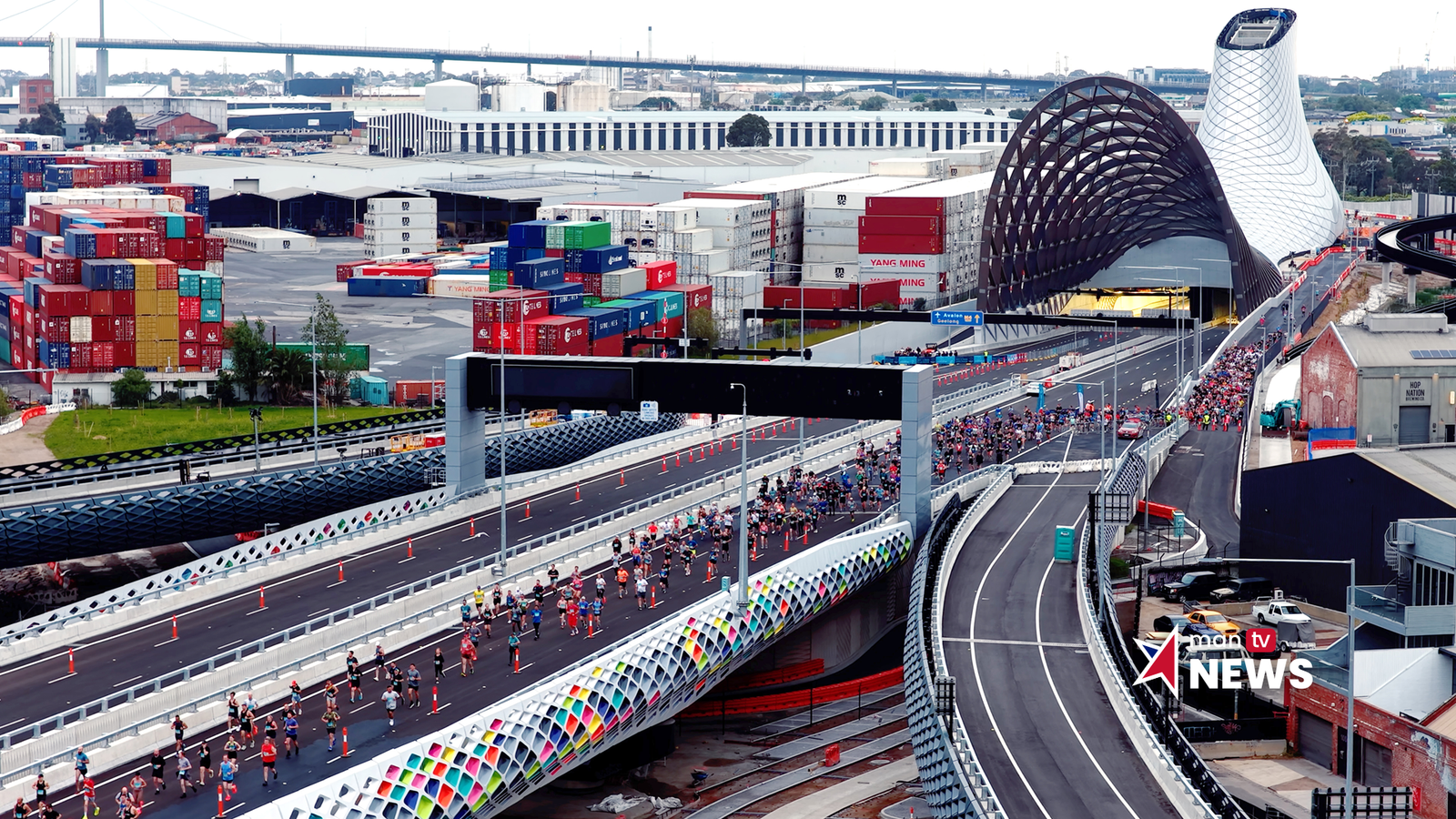
The project’s core is a pair of three‑lane tunnels under Yarraville: a 4‑kilometre outbound tunnel and a 2.8‑kilometre citybound tunnel, each 12 metres wide, with the roadway sitting up to 37 metres below ground. These tunnels connect directly to a new Maribyrnong River crossing and the Footscray Road skyroad, which carries traffic on dual elevated carriageways up to three lanes each way, roughly 13 metres above ground, feeding into Docklands and the CBD.
Beyond road capacity, the project delivers more than 14 kilometres of new and upgraded walking and cycling paths, including a 2.5‑kilometre Veloway – an elevated bike “expressway” along Footscray Road – plus over 9 hectares of new parks and wetlands. The extension of Wurundjeri Way creates the first new CBD bypass in 25 years, providing a direct link into Docklands and the Marvel Stadium precinct and easing pressure on inner‑city streets.
Traffic, trucks and travel time
Once open, the tunnel is expected to carry up to 67,000 vehicles a day, including around 15,000 trucks, diverting heavy vehicles away from residential streets and existing river crossings. Modelling suggests it will remove about 28,000 vehicles a day, including roughly 8,000 trucks, from the West Gate Bridge, and about 22,000 vehicles, including 3,500 trucks, from the Bolte Bridge.
Travel times between the CBD and the west – including key freight and commuter corridors to Geelong, Ballarat and the surf coast – are projected to fall by up to 20 minutes, with trips from western suburbs to the Port of Melbourne potentially up to 13 minutes faster. For local communities in the inner west, 24/7 “no‑truck zones” on several major roads are expected to take more than 9,000 trucks a day off residential streets, although truck volumes on Williamstown Road are forecast to increase as some drivers divert to avoid tolls.
Tolls and operations
The West Gate Tunnel will operate as a fully electronic toll road, with prices varying by vehicle type and time of day. For cars, the tunnel toll will be $4.09 per trip, with motorcycles charged $2.05 and light commercial vehicles $6.54, while an additional AM peak toll for cars of $6.54 will apply on weekday mornings between 7am and 9am for exits to Footscray Road, Wurundjeri Way and Dynon Road. Cars, motorcycles and light commercial vehicles can continue to use the upgraded West Gate Freeway and West Gate Bridge without paying a toll.
Transurban holds the concession to toll and operate the new road until January 13, 2045, with allowable toll increases of up to 4.25 per cent per year from July 2019. Heavy commercial vehicles will be tolled on the upgraded West Gate Freeway section between Millers Road and Williamstown Road, with those charges covering use of the tunnels and Hyde Street ramps, while new caps and discounts apply for frequent truck trips that also use CityLink.
Costs, delays and construction disputes
The West Gate Tunnel was originally pitched as a $5.5 billion project with a relatively small direct taxpayer contribution of around $400 million. Since then, the budget has ballooned to roughly $10.2 billion, with the state now contributing about $4.2 billion as the scheme absorbed cost overruns tied to contaminated soil disposal, pandemic‑era delays, labour shortages and supply chain disruptions.
Planned completion in September 2022 slipped by roughly three years, with tunnelling machines at one stage sitting idle amid a heated dispute between builders and Transurban over who should pay to manage and dispose of PFAS‑contaminated spoil. A settlement in late 2021 saw Transurban tip in an extra $2.2 billion, builders surrender about $1 billion in expected profit and Victorian taxpayers contribute another $1.9 billion to keep the project moving.
Engineering, safety and control systems
Two massive tunnel boring machines, Bella and Vida, each 15.6 meters in diameter, around 90 meters long and weighing about 4,000 tones, were custom‑built for the project and advanced at an average of 9 meters per day. Bella launched in March 2022 and took 415 days to complete the 4‑kilometre citybound tunnel, breaking through in May 2023, while Vida launched in April 2022 and completed the 2.8‑kilometre outbound tunnel in 295 days, emerging near Yarraville in February 2023.
The tunnels use a distinctive three‑deck design not seen in Melbourne’s other road tunnels, with an upper deck for exhaust and smoke extraction, a middle deck carrying three lanes of traffic and a lower deck housing services and maintenance access. Safety infrastructure includes 22 cross passages linking the twin tunnels and another nine connecting to the maintenance level, spaced roughly 120 meters apart to provide evacuation routes, backed by more than 8.4 kilometers of fire mains, approximately 26 kilometers of deluge piping, over 1,180 lights and 72 jet fans.
Design, structures and public realm
Architecturally, the project is marked by striking visual elements, including 132 tapered orange steel poles up to 14 meters high along the CityLink‑to‑Footscray Road ramp, and 15 similar poles at the M80 interchange to signal the western gateway. Three large “Timbernet” entrance structures made from renewable radiata pine glulam frame the tunnel portals, including a 38‑metre‑high structure at Yarraville weighing about 590 tonnes with 16 arches and 304 struts.
Two major ventilation structures, each around 50 meters high and 170 meters long, have been clad with thousands of façade panels, while inside the tunnels more than 10,000 architectural wall panels, 1.1 million meters of electrical and fibre cabling and 40,000 meters of cable supports have been installed as part of the 7‑kilometre‑long tunnel fit‑out. Along Footscray Road, 1,500 precast concrete segments were lifted into place by a launching gantry up to 30 metres above ground to form the skyroad, using nearly 107,000 tonnes of Australian‑made reinforced concrete.
Freight, economy and traffic management
The tunnel and its elevated links create direct freeway connections from the West Gate Freeway to the Port of Melbourne’s Swanson and Appleton Docks via MacKenzie Road and Appleton Dock Road, allowing heavy vehicles to bypass up to 17 sets of traffic lights. This is significant for Victoria’s freight sector, which employs about 240,000 people and is expected to see freight volumes more than double from around 440 million tonnes in 2020‑21 to about 908 million tonnes by 2050‑51.
A new integrated Traffic Control Centre, equipped with the SIDERA traffic management system and a 72‑square‑metre operations screen, will oversee the West Gate Tunnel, West Gate Freeway and CityLink using almost 900 cameras, including more than 400 AI‑enabled devices that can automatically detect incidents and trigger rapid response. Real‑time information, coordinated ramp signals and lane‑use controls will link the tunnel with other managed motorways across Melbourne, supporting smoother and safer journeys for drivers.
Community access and safety debate
Around 50,000 people recently walked the tunnel during a “discovery day”, giving Melburnians a rare chance to explore the new roadway on foot before vehicles arrive. The event unfolded amid criticism from the United Firefighters Union, which has raised concerns about tunnel fire safety and emergency access, claims strongly rejected by the state government and Major Road Projects Victoria, who maintain the tunnel has passed appropriate testing and regulatory checks.
For residents of Melbourne’s booming western suburbs, the opening marks the first new Maribyrnong River crossing since the West Gate Bridge nearly 50 years ago, promising faster commutes, less rat‑running through local streets and more travel options across the city. With its mix of tunnels, bridges, elevated roads, cycling links and public spaces, the West Gate Tunnel is set to become a defining piece of Melbourne’s 21st‑century transport network.


 English