






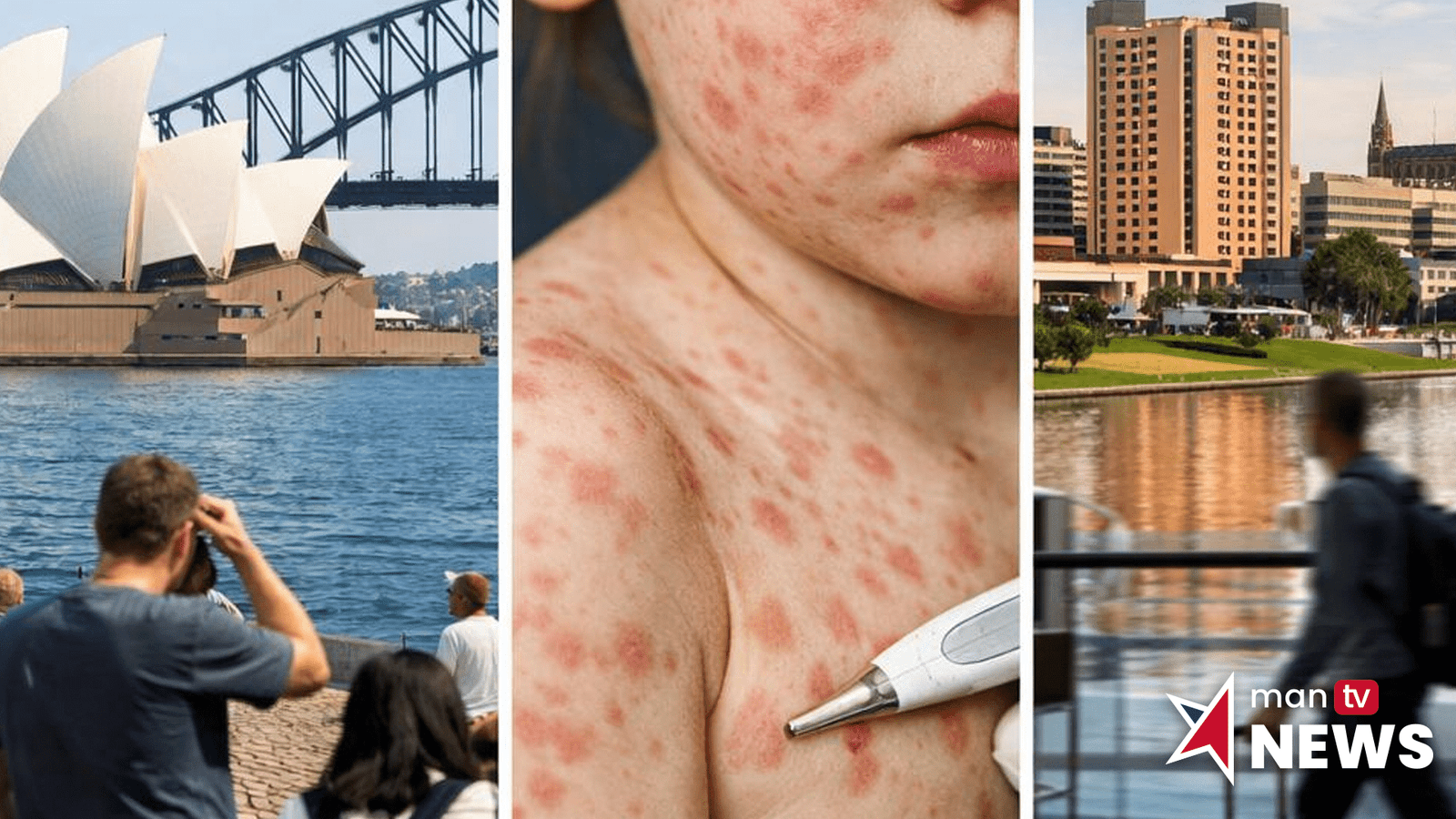
Measles alerts issued for Sydney and Adelaide after infectious travellers return from South‑East Asia
NSW and South Australian health authorities are urging recent travellers and holiday‑season shoppers to watch for measles symptoms after infectious adults returned from South‑East Asia and moved through busy airports, hospitals and shopping centres in late December. The alerts come amid a sharp rise in measles cases nationally, with public health teams warning that even short visits to exposure sites can pose a risk to people who are not fully vaccinated.
Key exposure locations
Health authorities in NSW have listed multiple exposure sites linked to a confirmed measles case who flew from Adelaide to Sydney on 29 December. These include Sydney Airport’s domestic terminal, the international arrivals area, and several locations in inner‑west and western Sydney, including Blacktown Hospital’s emergency department.
In South Australia, SA Health has confirmed that an adult who acquired measles overseas visited Marion Westfield Shopping Centre, Event Cinemas Marion, Cockles Café at Port Elliot, and Adelaide Airport before being diagnosed. A Qantas domestic service from Adelaide to Sydney on 29 December, listed as flight QF748 or QF29 in some reports, is also considered an exposure setting for passengers and crew seated nearby.
What measles is and how it spreads
Measles is a highly contagious viral illness spread through coughing, sneezing and tiny droplets that can linger in the air for up to 30 minutes after an infected person has left the area. Early symptoms can resemble a bad cold or flu, with fever, cough, runny nose and red, sore eyes, followed by a blotchy red rash that usually starts on the face and then spreads down the body. Because the virus is so infectious, health authorities treat any confirmed case in a public venue or on a flight as a serious public health risk, especially for babies and people with weakened immune systems.
Rising case numbers in 2025
The latest alerts in NSW and South Australia are part of a broader national pattern, with Australia recording a sharp rise in measles cases during 2025. Federal surveillance data cited by health departments show well over 100 cases nationally by around September, compared with only a few dozen in the previous year, and Western Australia alone reporting several dozen confirmed cases linked to overseas and FIFO travel. Health experts say that falling childhood vaccination coverage in some areas and increased international travel to regions experiencing measles outbreaks, including parts of South‑East Asia, are driving the resurgence.
Timeframe for symptoms and who should act
Public health units in NSW and SA are urging anyone who was at the named exposure sites at the listed times to monitor their health for 18 to 21 days, which is the typical incubation period for measles. People who develop fever, runny nose, cough, sore eyes or a rash are being asked to call ahead before visiting a GP or emergency department so clinics can reduce the risk of exposing other patients.
Authorities are particularly concerned about people who are not fully vaccinated, including infants under 12 months, adults who missed childhood doses, and people born overseas who may not have received routine measles‑mumps‑rubella (MMR) vaccines. Those in high‑risk groups who were at exposure locations are being advised to discuss post‑exposure vaccination or other preventive options with their doctor or local public health service.
Public health message for multicultural communities
Health officials emphasise that measles can be prevented through two doses of the MMR vaccine, which are available free under the National Immunisation Program for eligible age groups and those catching up on missed doses. They are encouraging families with links to South‑East Asia and other regions with ongoing outbreaks to check their immunisation records before travelling and to seek medical advice if unsure about their vaccination status.
Community leaders and multicultural media outlets are being asked to help share accurate information in multiple languages so that recent travellers, international students, new migrants and airport or retail workers understand the symptoms and know when to seek care. The aim is to avoid panic but ensure that anyone at risk is alert, vaccinated where possible, and able to access timely medical support if they become unwell.


 English