





Filipino community keeps nine-day Christmas tradition alive in Mackay
Nine days of faith and festivity
In Mackay, north Queensland, the local Filipino community has once again turned Christmas into a nine day celebration of faith, food and music through the cherished Simbang Gabi tradition. The series of pre‑dawn and evening Masses, known as “night Mass,” is one of the most enduring Christmas customs in the Philippines and has now become a fixture of the regional city’s multicultural calendar.
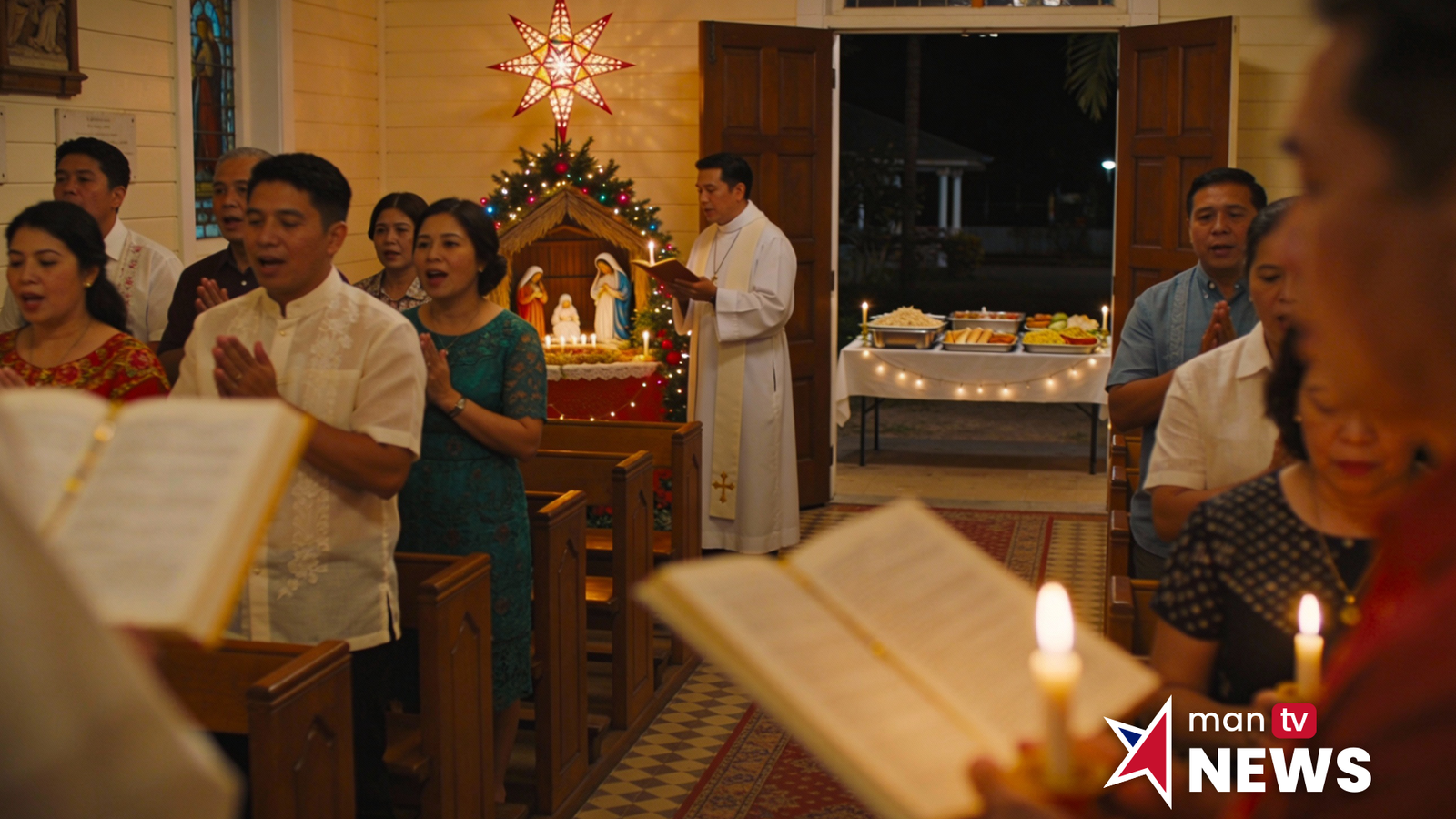
Simbang Gabi blends Catholic worship with a festival atmosphere, bringing families together for liturgy, carols in Filipino and English, and a generous spread of home‑cooked dishes shared outside the church. Organisers say the combination of prayer, song and food is what makes the celebration feel like “Christmas back home,” even thousands of kilometres from Manila.
Home cooking that ‘glues people together’
For long‑time community leader Vivien Hanrahan, the heart of Simbang Gabi is found in the kitchen as much as in the pews. Now president of the Mackay Filipino Australian Community Inc (MaFaCi), she still uses her mother’s recipes for spring rolls, empanadas and glazed ham to feed worshippers after Mass.
Hanrahan recalls being enlisted as a child in the Philippines to help prepare from October for the December celebrations, including the task of slowly turning a curing ham leg each week. She jokes that her mother always insisted on serving sticky rice at major occasions because “it keeps people together,” a saying she has carried into her community work in Mackay.
Ancient tradition adapted to regional life
Simbang Gabi dates back to the 16th century, when farmers in the Philippines attended Mass from around 3am before heading to the fields in the cool of the morning. In its homeland, the novena of nine consecutive services typically runs from December 16 to 24, culminating in Christmas Eve.
In Mackay, the format has been adapted to local realities, including a shortage of priests, with this year’s observance condensed into a single evening Mass at St Patrick’s Church. Despite the reduced schedule, the church was filled with parishioners and guests, and the choir led a spirited program of Filipino hymns that turned the liturgy into a celebration of cultural identity.
Mackay’s growing Filipino population
Mackay is now home to one of Queensland’s largest Filipino communities outside the capital, with more than 2,000 people of Filipino background calling the regional city home. Census data shows Filipinos are the third‑largest migrant group in Mackay, behind residents born in England and New Zealand, underscoring their growing influence in local workplaces, churches and schools.
Modern migration has built on a much older connection between Australia and the Philippines, which began in the late 19th century with Filipino “Manilamen” working as pearl divers in northern waters. Later migration was constrained by the White Australia Policy and resumed only after its dismantling in the 1970s, coinciding with political upheaval and economic hardship under Ferdinand Marcos in the Philippines.
New arrivals finding safety and belonging
Among Mackay’s newer arrivals are nurses Vic and Julyn Chunle Cavales, who chose the city for its familiar tropical climate and opportunities in the local health sector. Their pathway was far from straightforward, with visa complications linked to their daughter Cheska’s Down syndrome leaving the family split between three countries for seven years before finally reuniting in Mackay in 2022.
The family has since become Australian citizens, a milestone Ms Cavales describes as worth the emotional toll of the lengthy process because it offers her daughter security and stability. Community organisations such as MaFaCi supported the family through the ordeal, demonstrating the strong networks that have formed around Mackay’s Filipino diaspora.
Tradition making Mackay feel like home
For many long‑term residents, Simbang Gabi has become a touchstone that transforms feelings of homesickness into pride in a shared heritage. Community members say that when they first arrived, they felt isolated and missed the sounds and flavours of the Philippines, but as more Filipinos settled in Mackay, they began re‑establishing key traditions such as Simbang Gabi and Philippine Independence Day.
Organisers now see the celebration as a gift they can offer the wider Mackay community, inviting neighbours of all backgrounds to experience Filipino worship, food and hospitality. For participants, singing childhood carols in their own language and sharing a meal after Mass turns a regional Queensland church into a second home each Christmas, reinforcing Mackay’s reputation as a welcoming multicultural city.


 English