






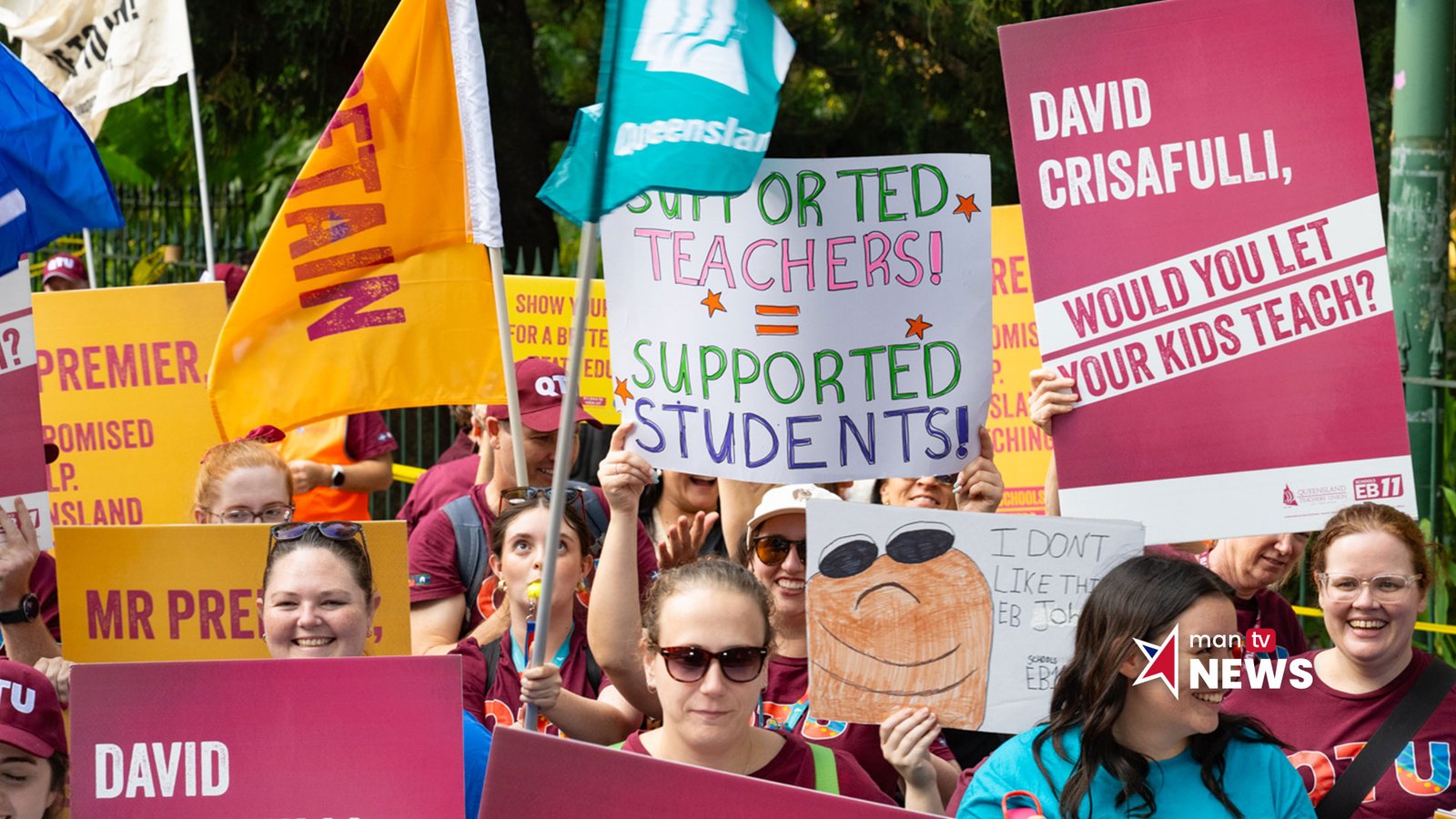
Crisis in the Classroom: Queensland Teachers Forced to Strike Following Government Inaction
Queensland state school teachers and school leaders are set to walk off the job for 24 hours on Tuesday, November 25, resulting in significant impacts across schools statewide. This unprecedented action comes after the Crisafulli government reportedly refused once again to enter into dialogue with the Queensland Teachers’ Union (QTU).
The decision to strike follows a period where QTU members rallied before and after school across the state, urgently calling on the Crisafulli government to reopen communications and deliver a salary and conditions package deemed acceptable by the members.
QTU President Cresta Richardson expressed profound disappointment, stating that the Premier chose to ignore the Union and “ran away from his promises,” leaving state educators and school communities with no recourse but to strike.
A Failure to Negotiate
The QTU asserts that the strike is a direct result of government failure. The deals that have been offered were “roundly and soundly rejected,” and the government has ignored the “serious issues facing state education,” according to Ms. Richardson.
QTU Vice-President Leah Olsson stressed that members do not want to strike, but that the action is necessary to send the government a clear message, emphasizing that the community deserves sufficient teachers in schools, and students require safe classrooms and necessary resources. The current impasse is deeply rooted in the government’s persistence with its rejected wages policy, even after more than 20 meetings with Union representatives and a period of conciliation within the industrial commission.
The QTU notes a disparity in how different sectors have been treated; while nurses successfully secured extra financial benefits through negotiation and police obtained extra payments and incentives, educators have been “shortchanged” by David Crisafulli, a situation Ms. Olsson believes should be concerning to all Queenslanders.
Deepening Education Crises
Beyond salary concerns, the core reasons driving the walkout involve profound systemic problems that the QTU accuses the government of ignoring:
- Worsening Teacher Shortage Crisis: The QTU warns that Queensland is running out of teachers and that state education will not function as expected unless these key issues are addressed urgently. The Crisafulli government, the QTU argues, “can’t attract new teachers to work in unsafe classrooms with crippling workload”.
- Unmanageable Workload: Workload is cited as one of the critical issues affecting education that has an impact on society.
- Increasing Violence and Aggression: This is also listed among the ignored issues that contribute to an inability to retain valued educators who have been “abused and burnt out”. The QTU is demanding clarity on several governmental claims and plans. They have called on the government to clarify its claim that all classroom teachers would be earning in excess of $100,000 by the end of the proposed package. Furthermore, the QTU wants Minister John-Paul Langbroek to “tell the truth about the deal he offered” and for the government to reveal its strategy for attracting new people to the profession, particularly in rural and remote centers.
Arbitration and Political Consequences
The Union characterizes the government’s failure to act as evidence that Premier David Crisafulli and Minister John-Paul Langbroek “don’t have a plan or an appetite for fixing education”. The current industrial dispute is poised for a lengthy process. Without the QTU’s consent, the earliest arbitration can begin is December 30. QTU leaders accuse the government of being “more interested in delaying its responsibilities and hurting teachers, school leaders, and students through two years of arbitration than in genuinely resolving this dispute”.
President Richardson labeled the government’s approach as a “scare tactic” intended to cause fear and harm, suggesting that the government intends to strip pay and conditions, increase class sizes, and rewrite every single piece of the current agreement.
Despite the challenges, the QTU is assuring the community that it appreciates the “overwhelming support” it has received. They stress that the strike could have been avoided entirely, noting that the government is the “only party unwilling to communicate and negotiate,” offering nothing but “indifference and disrespect” while members rally and strike without pay.
The QTU has reminded the Premier that there is still time to prevent the strike by delivering on his commitment to teachers and school leaders and intervening, urging him to make an offer that can be recommended to members.
However, QTU President Richardson’s prediction is grim: “My bet is the Premier won’t reach out, the Minister will not stand up for his portfolio, and the Director-General won’t advocate for her employees, and every Queenslander will bear witness.” In the end, the QTU warns, the students of Queensland who “can’t vote will wear the consequences”.


 English