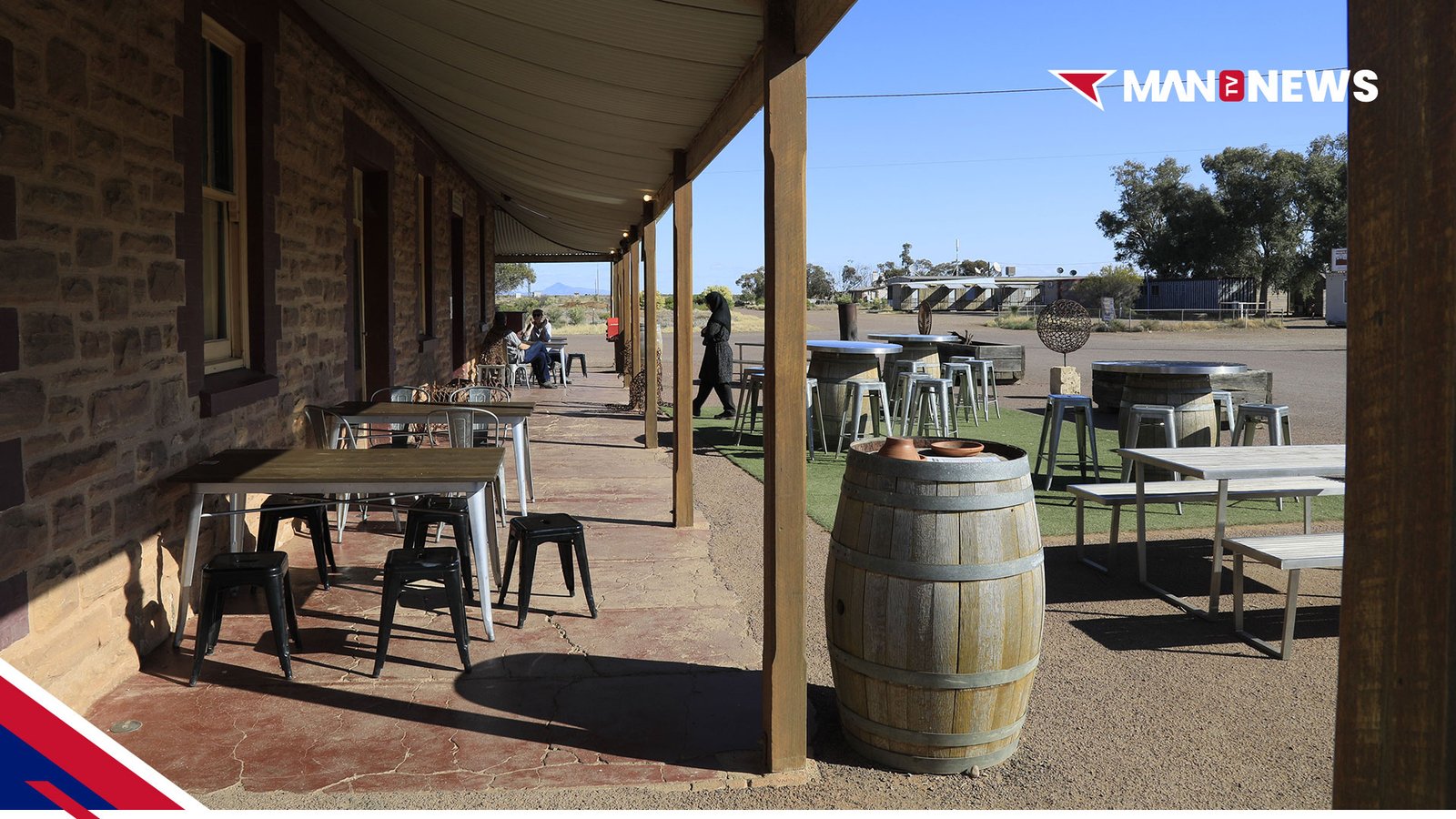
Across regional Australia, a café can be much more than somewhere to grab a coffee. For generations, country cafés have served as meeting places, informal support networks, local employers and gathering points for communities where services can be limited.
Their history is closely linked to Greek migration. During the 20th century, Greek-Australian families opened cafés, milk bars, oyster saloons and confectioneries across the country, introducing a mix of Greek hospitality and popular Australian and American-style foods. Burgers, ice-cream sodas, sundaes and handmade sweets became familiar features of country-town life.
In Kiama, NSW, Greek migrant Constantinos “Con” Moscko established a large café in 1928 after arriving in Australia in 1913. The business became a social hub, reflecting the important role cafés played beyond simply serving food.
Historic cafés also form part of Australia’s cultural heritage. The National Museum of Australia holds furniture from the Busy Bee Café in Gunnedah and silverware from the Blue Bird Café in Lockhart.
The Paragon Café in Katoomba is another landmark. Opened in 1916 by Greek migrant Zacharias Theodore “Jack” Simos, it became famous for its chocolates, pastries, ice cream and distinctive Art Deco interiors. Although the café closed in 2018, the building remains heritage-listed. In 2026, the NSW Government took its owner to the Land and Environment Court over alleged failures to maintain the heritage property.
In smaller towns, cafés can become essential community institutions.
In Ungarra, South Australia, the volunteer-run Ungarra Community Café gives residents and farmers a place to meet, while proceeds have supported charities and community groups. In Mungindi, on the NSW–Queensland border, local women revived a struggling coffee shop after the community endured drought, bushfires and the disruption of COVID-19.
But keeping these businesses open is becoming increasingly difficult. Rising wages, rent, food, utilities and supply costs, along with staff shortages, are putting pressure on regional operators.
CreditorWatch reported that 10.4 per cent of food-service businesses closed in the year to February 2026, the highest closure rate among industries tracked in its data.
Yet cafés remain an important part of Australia’s economy, with cafés, restaurants and takeaway food services recording $66.273 billion in turnover in the year to June 2025.
For many country towns, however, their value cannot be measured by revenue alone. They provide jobs, preserve local history and create a place where people can simply sit, talk and feel connected.
In regional Australia, the humble café remains one of the places where community happens.
Hint: The password should be at least eight characters long. To make it stronger, use upper and lower case letters, numbers, and symbols like ! " ? $ % ^ & ).









 English