






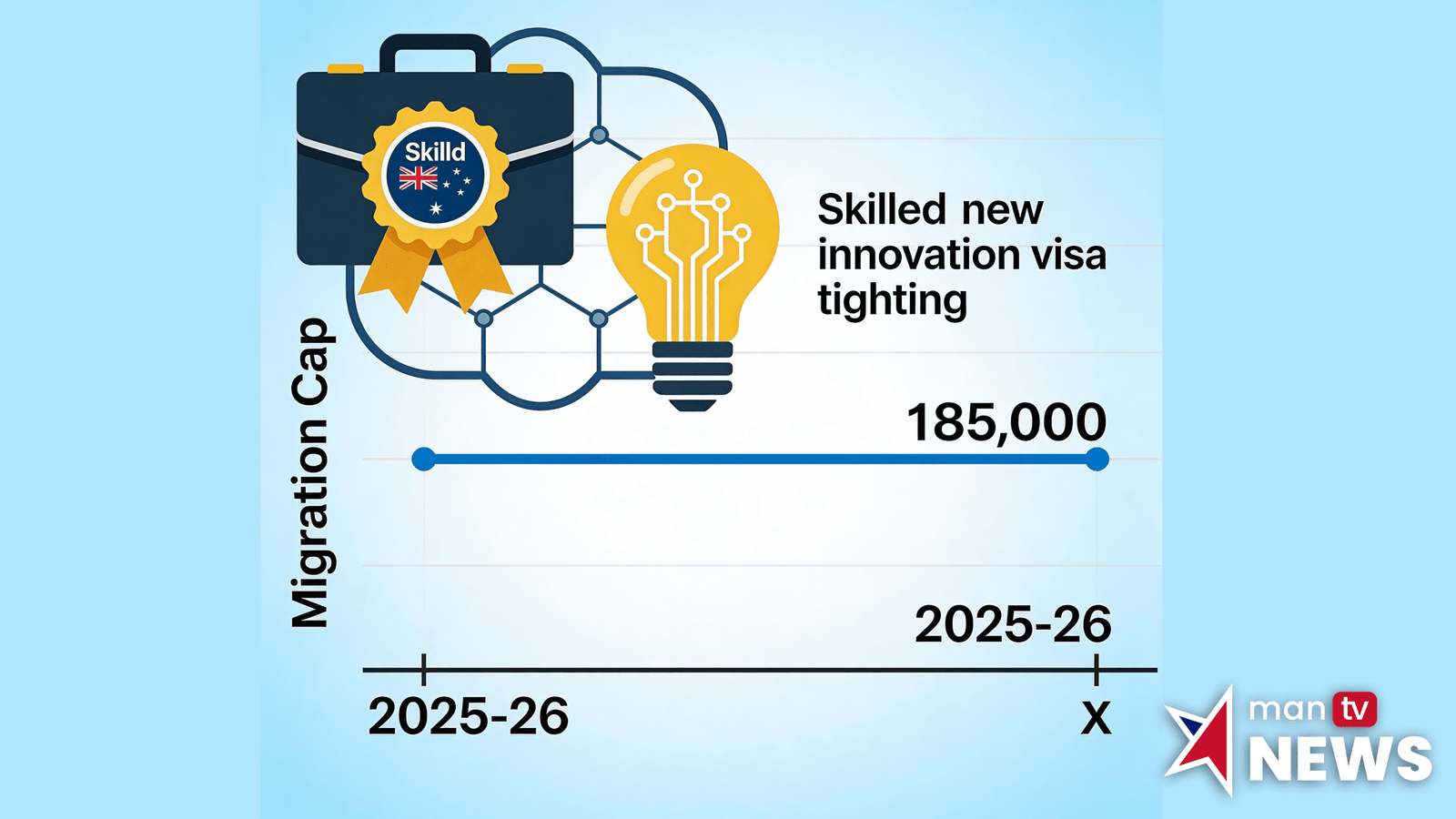
Australia Holds 185,000 Migration Cap for 2025–26 as Skilled Intake Tightens and New Innovation Visa Looms
What the new cap means
The Department of Home Affairs confirmed that the 2025–26 permanent Migration Program will remain at 185,000 places, the same size as 2024–25 after consultations with all states and territories. Within that cap, 132,200 places (about 71 per cent) are allocated to the Skill stream, 52,500 to Family and 300 to Special Eligibility, reinforcing skilled migration as the backbone of the system.
Officials have signalled three priority clusters for skilled visas in the coming year:
- Health and aged care, including nurses, allied health and care workers.
- Clean-energy engineering and related technical roles in the energy transition.
- Advanced manufacturing, including high-tech, defence and precision production.
Home Affairs will publish updated state and territory nomination allocations in early 2026, after new Australian Bureau of Statistics population forecasts are released, meaning jurisdictions will then know exactly how many places they have to offer under state-nominated and regional visas.
Tougher rules for applicants and sponsors
While the cap stays the same, policy settings around who can access those 185,000 places are tightening. The government has flagged higher English-language requirements and rising minimum salary thresholds in several skilled pathways to “sharpen the focus on high-value applicants”. For employer-sponsored visas, income benchmarks such as the Temporary Skilled Migration Income Threshold are set to edge higher again from mid-2025, lifting costs for hospitals, care providers and regional employers already operating on thin margins.
Compliance will also become more intrusive. Home Affairs plans to expand data-matching with the Australian Taxation Office and increase targeted site visits, putting more pressure on employers to prove that salaries, roles and labour-market testing align with visa promises. Global mobility professionals are being warned to keep meticulous records, from advertising evidence to payroll data, to avoid sanctions or refusals.
New Talent/Innovation visa and regional focus
A major structural change in 2025–26 is the consolidation of elite and innovation-focused visas into a new National Innovation or “Talent and Innovation” visa category, absorbing legacy Global Talent and Distinguished Talent caseloads. This new points-tested stream is being marketed as a faster pathway for top-tier candidates in technology, research, clean energy and other high-growth sectors, though salary and achievement benchmarks are expected to remain demanding.
At the same time, regional and state/territory nominated categories will continue to account for roughly half of the Skill stream and about 36 per cent of the overall program, underpinning ongoing efforts to direct newcomers beyond the biggest capitals. States such as Queensland, South Australia and Tasmania can adjust their own criteria—like occupation lists, work experience and onshore study within their allocated quotas to target local labour shortages.
What this means for migrants and employers
For prospective migrants, the key message is that competition will remain intense but the door is still open. With demand for popular skilled visas such as Subclass 482, 186 and points-tested visas already running well above available places, applicants will need stronger English scores, higher salaries and carefully prepared skills assessments to stand out. Temporary residents already in Australia including graduates and existing workers may benefit from lodging skills assessments and expression-of-interest profiles early, ahead of any mid-year recalibration of points or occupation ceilings.
For employers, the stable 185,000 cap offers planning certainty for the 2025–26 financial year, especially for sectors that rely on long lead times to recruit from overseas. However, higher wage floors, stricter English standards and more compliance checks will add cost and administrative load, particularly for regional hospitals, aged-care providers and renewables projects already facing workforce shortages.
Practical steps for 2025–26
Migration specialists and industry advisers are already recommending several concrete steps:
- Employers: audit labour-market testing, contracts and payroll systems before the February quota release to ensure every sponsored role meets updated wage and skills rules.
- Prospective skilled migrants: keep English scores current, gather complete evidence for qualifications and work history, and monitor state nomination criteria as allocations are published.
- High-talent candidates: watch for detailed guidelines on the new National Innovation/Talent and Innovation visa, as this stream may offer a more direct pathway than general skilled migration for those meeting advanced salary and achievement thresholds.
As Australia heads through another year of record population growth and housing pressure, the 2025–26 migration program is being refined rather than cut keeping numbers steady while demanding more from both employers and migrants in return for a permanent place.


 English