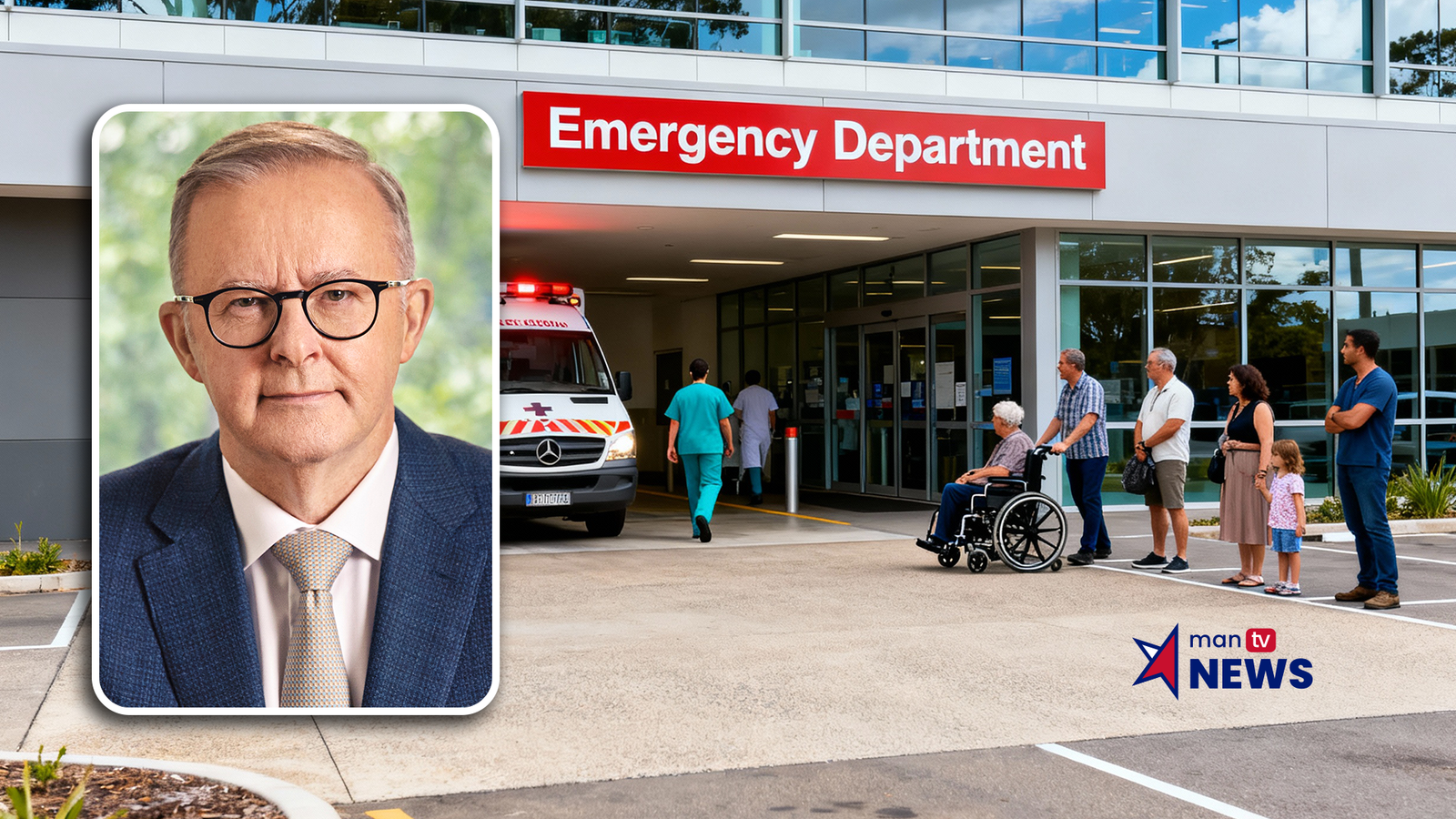
CANBERRA, Thursday, December 11, 2025 – Tensions between the Commonwealth and state governments have reached a boiling point today after Prime Minister Anthony Albanese tabled a revised $21 billion funding offer for Australia’s public hospitals a proposal that state leaders have already branded “underwhelming.”
In a bid to break the deadlock on a new five-year National Health Reform Agreement, the Prime Minister reportedly wrote individual letters to state and territory leaders this week, putting forward an additional $21 billion investment spread over the next five years.
The package includes a targeted $2 billion over four years specifically designed to free up hospital beds currently occupied by elderly patients and those awaiting NDIS support a critical bottleneck known as “bed block” that plagues emergency departments nationwide.
However, the offer has received a frosty reception. State ministers argue the increase is negligible, representing only a minor bump from the previous $20 billion proposal rejected earlier this year.
“Underwhelming” and “Insufficient”
Queensland Health Minister Tim Nicholls led the charge against the proposal today, telling State Parliament that the offer failed to meet the reality of the crisis.
“This offer is lacking and fails to meet Queensland’s needs regarding stranded Australians, health funding growth, and disability reform,” Nicholls said.
Other state sources, speaking anonymously to the ABC, described the deal as “clearly not sufficient” and unlikely to lead to an agreement before the year’s end. One minister noted that while the movement was appreciated, it would not alleviate the crushing pressure on emergency departments and elective surgery waiting lists.
The Core of the Dispute
At the heart of the conflict is the federal contribution to public hospital costs. Under a landmark agreement in 2023, the National Cabinet set a target to increase the Commonwealth’s share of funding to 45 per cent by 2035, up from the traditional cap of roughly 40 per cent.
Despite this “glide path,” states contend that the actual flow of federal cash is lagging. They argue the current offer leaves them shouldering too much of the burden for rising costs, particularly as they take on more responsibility for foundational disability supports outside the NDIS.
Compounding the tension was a separate letter from Mr. Albanese sent in September, which urged states to “rein in” their hospital spending to “sustainable levels” if they wanted the deal finalized a demand that was met with anger from state treasurers who argue demand is driven by an aging population, not waste.
Race Against Time
Federal Health Minister Mark Butler remains optimistic, stating today that he is “confident” a deal can still be struck before 2026.
“I would be surprised if any health minister could genuinely claim that every single hospital is functioning as efficiently as possible,” Butler said, defending the Prime Minister’s push for financial sustainability.
With the current interim funding agreement set to expire in mid-2026 and South Australia entering a caretaker election mode in February, time is running out to secure a long-term deal. If no agreement is reached, Australia’s public health system faces a period of fiscal uncertainty just as demand hits record highs.
Hint: The password should be at least eight characters long. To make it stronger, use upper and lower case letters, numbers, and symbols like ! " ? $ % ^ & ).









 English