






120 Days on Foot: How Buddhist Monks’ 2,300-Mile Walk for Peace Is Reawakening America’s Hunger for Compassion
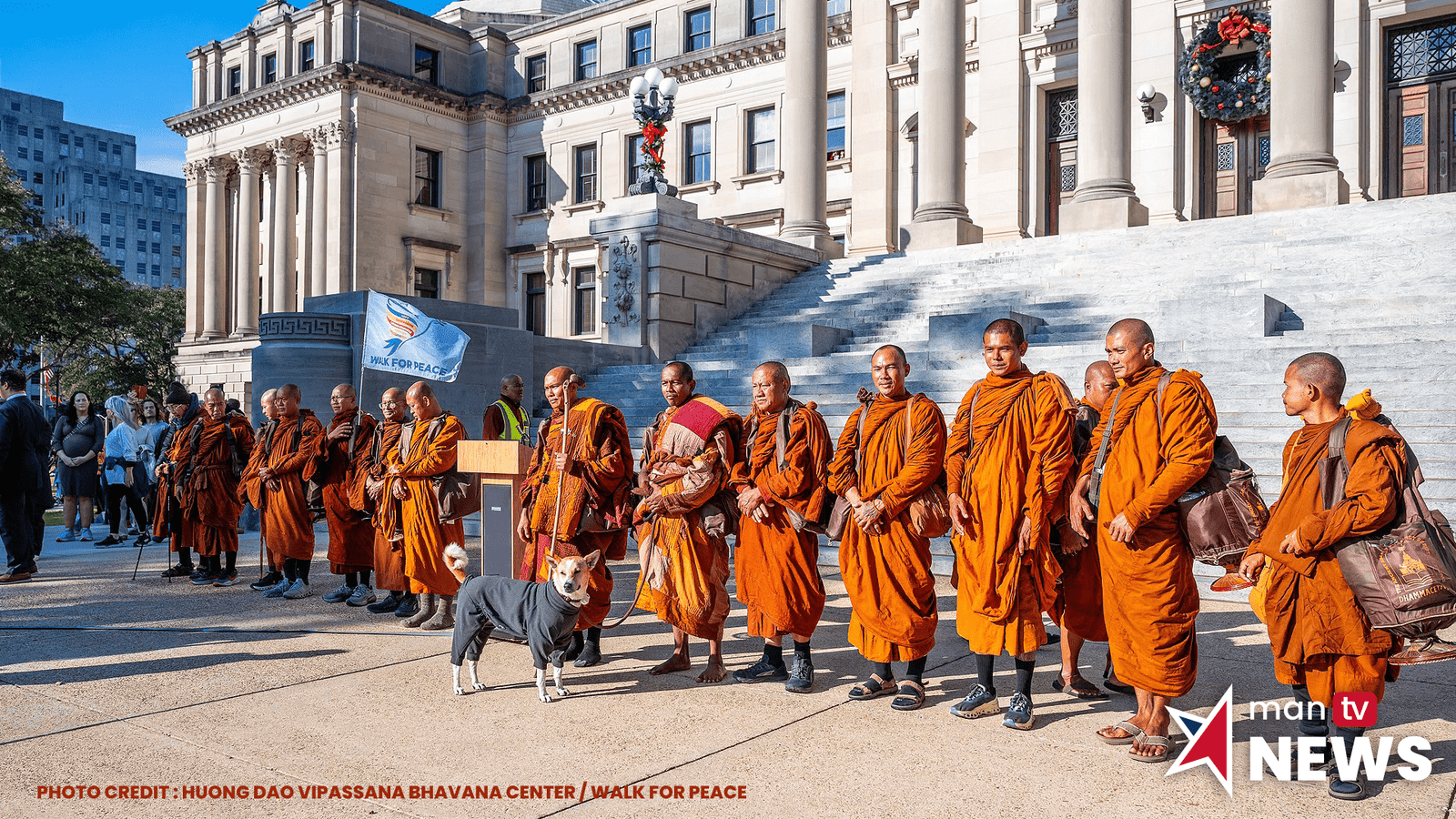
The Walk for Peace 2026 in the United States has become an extraordinary grassroots spiritual pilgrimage, led by roughly two dozen Buddhist monks and their rescue dog Aloka, walking more than 2,300 miles from Fort Worth, Texas, to Washington, D.C. Their journey is drawing massive crowds, viral social media support, and a growing sense that communities across the country are hungry for a more peaceful and compassionate national conversation.
What the Walk for Peace Is
The Walk for Peace is a 120-day, 2,300-mile pilgrimage through 10 U.S. states, starting at the Huong Dao Vipassana Bhavana Center in Fort Worth on 26 October 2025 and expected to conclude at the U.S. Capitol in mid-February 2026. Around 19–24 monks are walking together, accompanied by Aloka, to “raise awareness of peace, loving kindness and compassion throughout America and the globe,” describing the journey as a spiritual offering rather than a political protest.
They typically walk 20–30 miles a day, often in silence, relying on donations for food and accommodation while observing monastic discipline by eating one meal a day and sometimes sleeping outdoors under trees or at simple lodgings offered by supporters. Their route takes them from Texas through the Deep South and up the East Coast, with scheduled stops in places such as metro Atlanta, Jackson in Mississippi, Raleigh in North Carolina and eventually Richmond, Virginia, before arriving in Washington, D.C.
Who Is Behind the Journey
The walk is organised by a U.S.-based Theravada Buddhist community linked to Huong Dao Buddhist Temple in Fort Worth, operating publicly under the banner “Walk for Peace USA” and coordinating activities through official social media pages. Monastic leaders and teachers present the project as a collective undertaking grounded in meditation practice and teachings on non-violence, mindfulness and compassion, with sermons along the route urging people to pause, breathe and respond to conflict with care rather than reaction.
Their public presence is heavily digital: the Walk for Peace accounts have attracted well over half a million followers on Facebook and hundreds of thousands more on Instagram, while a live-tracking map lets supporters follow the monks’ exact location in real time. A dedicated profile for “Aloka the Peace Dog” has amassed around 210,000 followers, turning the dog into an unexpected symbol of resilience and kindness on the road.
Community Reactions on the Ground
At local stops, the walk is turning into a mass public gathering. In Morrow, Georgia, thousands of people packed into and around a local centre, standing on cars, sitting on blankets and queuing outside a venue that quickly reached capacity just to glimpse the monks and receive a blessing. Attendees described the event as “monumental” and emphasised that there was “nothing monetary” about it, only spirituality, consideration and a shared longing for calm in a tense time.
Local mayors and police departments in several states have stepped in to manage traffic, provide escorts and ensure safety, especially after a serious traffic collision near Houston, Texas, left one senior monk with life-changing injuries and led to increased law-enforcement support along busy roads. Municipal leaders and community spokespeople have praised the walk as a rare moment of unity across political and religious lines, with one mayor noting that peace is “a message that we all understand” regardless of background.
Online Engagement and People’s Hopes
On social media, Walk for Peace has become a national talking point shared across news feeds, local Facebook groups and Instagram reels that are more often dominated by polarising or partisan content. Official pages post route updates, drone footage and short reflections, while followers respond with prayers, personal testimonies, offers of food and accommodation, and invitations for the monks to visit their towns.
Many comments say people have been “moved to tears” watching the monks walk 2,300 miles for compassion, with families in states like Alabama and Georgia driving out to the roadside to hand over food, water and warm clothing as the group passes. Others tie the walk to broader hopes for 2026 calling for free speech, human rights and a “more peaceful world” and some pledge to join the monks on their final approach into Washington, D.C., to physically walk alongside them.
Why This Peace Walk Matters
The journey is unfolding at a moment when U.S. public life is marked by political polarisation, protest and online disinformation, making a visibly non-violent, faith-driven movement especially striking. Images of silent monks walking single file along foggy back roads or four-lane highways under police escort offer a counter-narrative to anger and division, inviting people to see peace as a daily, embodied practice rather than an abstract slogan.
Peace-media analysts note that initiatives like this align with the ideas of “peace journalism,” which highlights solutions, reconciliation and cross-community empathy instead of focusing only on conflict and crisis, potentially reducing audience fatigue and cynicism. As the Walk for Peace approaches Washington, D.C., many supporters say the walk has already left its mark in smaller places on back roads and small-town sidewalks where national debates may feel distant but shared moments of attention, care and quiet solidarity are deeply felt.


 English