






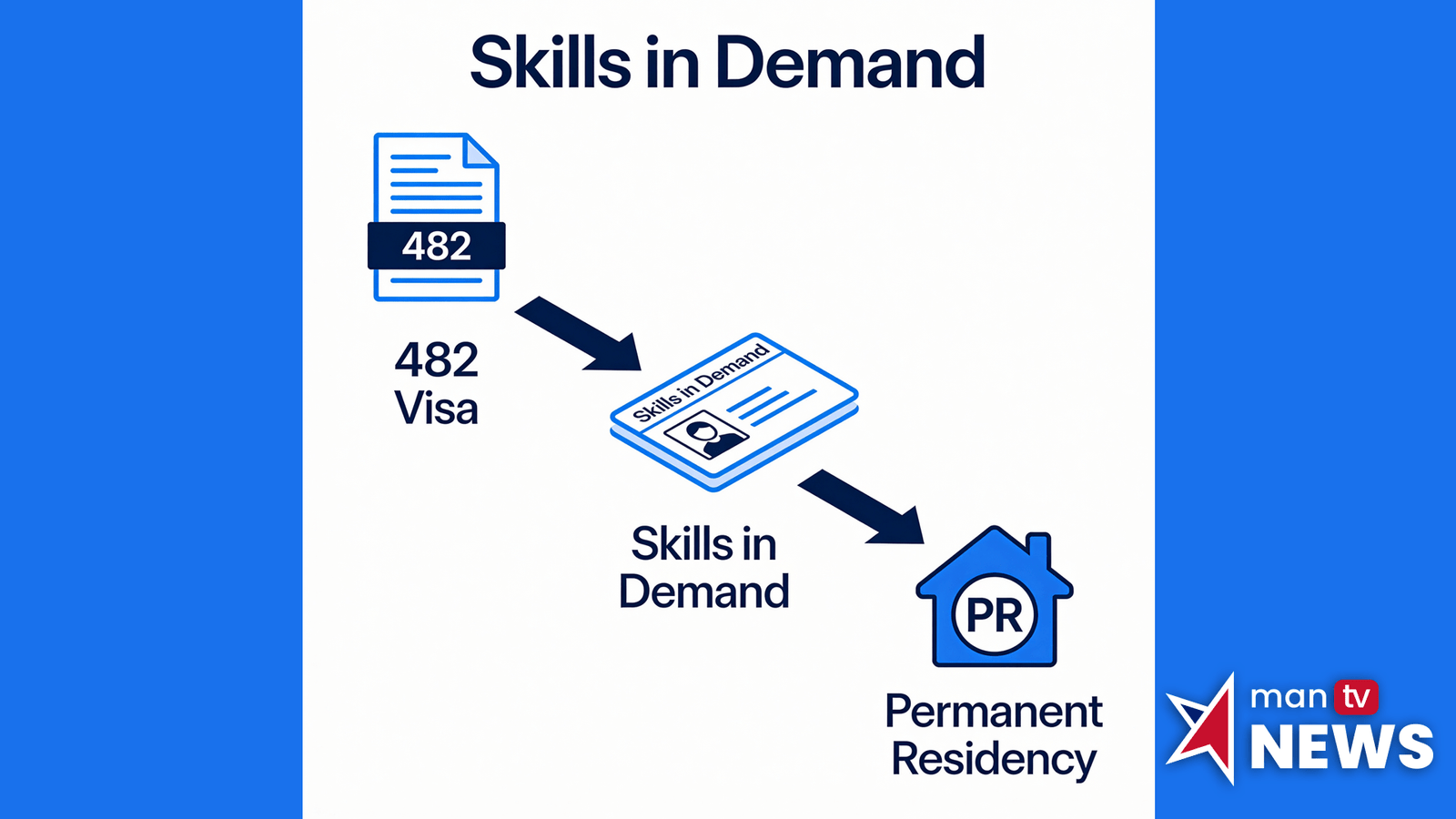
New ‘Skills in Demand’ Visa Reshapes Australia’s Work Routes, Replacing 482 and Opening Clearer Path to PR
Australia has begun a major reset of its skilled migration system, phasing out the long-running Temporary Skill Shortage (subclass 482) visa and rolling in a new “Skills in Demand” visa that promises faster, fairer and more flexible routes to long-term work and permanent residency. For employers and migrants alike, the change marks the biggest overhaul of employer-sponsored visas in almost a decade and will shape who can live and work in Australia through the late 2020s.
Under the redesigned program, the Skills in Demand (SID) visa keeps the same legal subclass number 482 but introduces three streams: Core Skills, Specialist Skills and Labour Agreement, the last of which will be rebranded as “Essential Skills” as sector pilots mature. Each stream offers up to four years in Australia and a defined pathway to permanent residency, replacing the old split between short-term and medium-term 482 visas that left many workers in limbo.
The Core Skills stream is expected to carry most of the program, targeting roles on a new Core Skills Occupation List (CSOL) backed by Jobs and Skills Australia’s shortage analysis, with a floor salary tied to the Core Skills Income Threshold around AUD 73,150 for 2024–25, rising to AUD 76,515 in 2025–26. Specialist Skills is aimed at highly paid professionals on salaries of roughly AUD 135,000 or more, removing occupation lists but excluding broad lower-skill categories such as general labourers or machine operators. The Labour Agreement/Essential Skills pathway will be tightly managed, allowing lower salary points in sectors like aged care and disability support where Australia faces acute shortages but insisting on caps and additional safeguards.
One of the biggest wins for workers is the cut to experience requirements: instead of two years, many SID applicants now need one year of full-time, relevant employment in the past five years, opening doors for mid-career professionals and younger talent in fields such as engineering, ICT, health and construction. The visa also gives more breathing space if a job falls through, with holders able to move between sponsors and having an extended grace window often up to 180 days to line up a new employer, rather than facing an immediate exit.
For employers, the reforms are a mixed package of speed and scrutiny. Sponsorship pathways are being modernised and labour-market testing simplified, including the removal of mandatory advertising on Workforce Australia, but businesses will need to prove they are paying market rates and meeting new salary thresholds that are indexed each year. Payroll audits and compliance checks are set to become more intensive, especially where there are patterns of underpayment or repeated turnover of sponsored staff.
At the heart of the SID design is a shift to dynamic, evidence-driven planning. Jobs and Skills Australia now advises on occupation shortages and helps shape the Core Skills Occupation List, with no hard caps on how many visas can be granted in a particular occupation when shortages are verified. That model is intended to better match visa grants with real-time gaps in areas such as regional healthcare, critical trades, advanced manufacturing and clean-energy projects, rather than relying on lists that might take years to update.
Visa costs remain significant. Recent program settings put the primary SID visa application charge a little above AUD 3,000, with additional fees for family members and existing nomination charges and training levies still borne by employers. For thousands of current Temporary Skill Shortage visa holders already in Australia, transitional rules mean they can either shift into the new SID framework at renewal or move directly into permanent residency if they meet updated work, salary and occupation rules.
For migrants overseas, the message is clear: Australia is not closing the door to skilled workers, but it is tightening the frame prioritising higher salaries, verified shortages and clearer two-way commitments between workers and employers. For Australian businesses still struggling to fill roles, especially in regional areas and essential services, the new Skills in Demand visa may become the main channel to bring in talent provided they can meet the higher bar and prove they are doing the right thing by the people they sponsor.


 English