






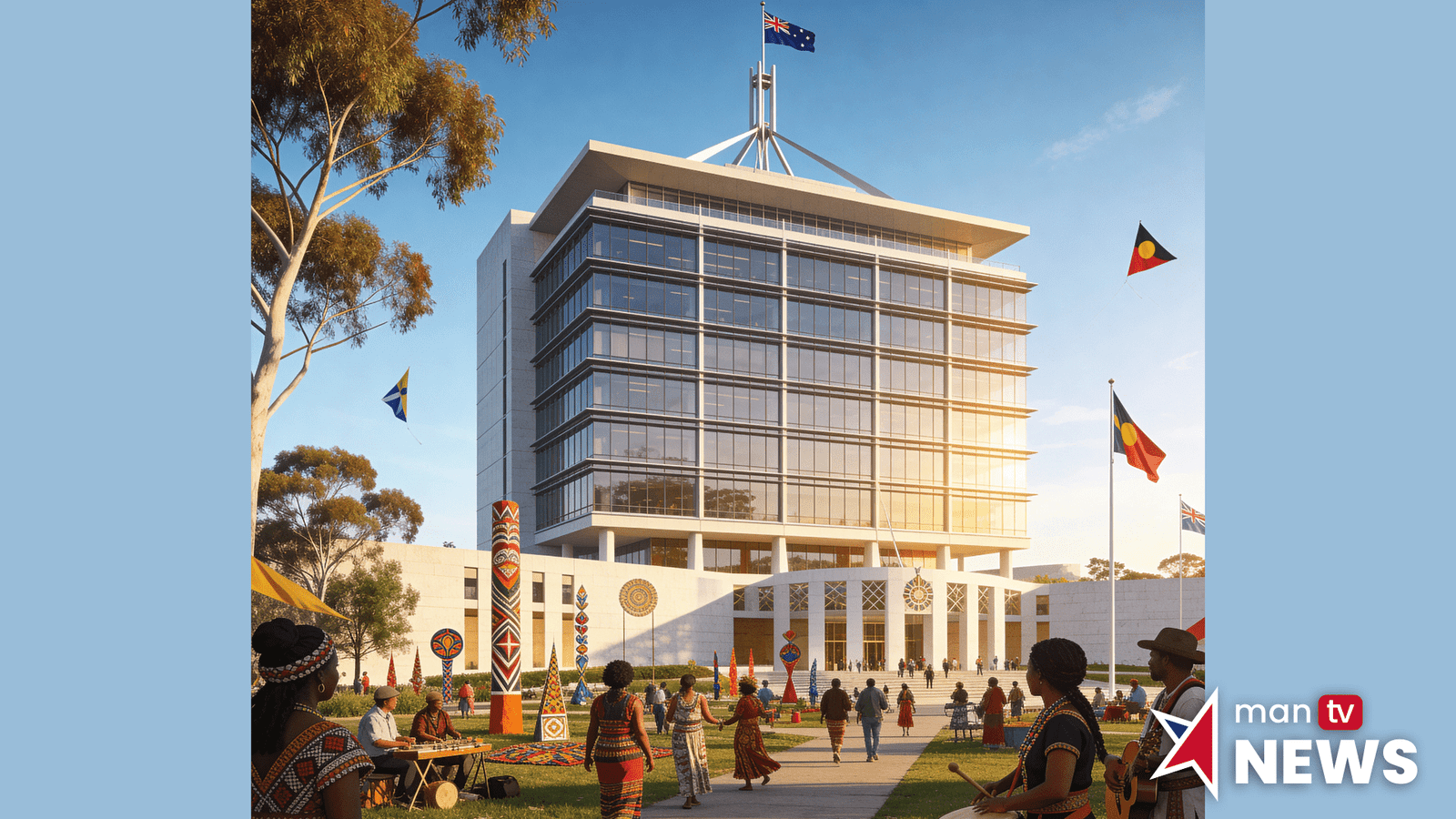
Canberra Puts Multiculturalism at the Center of Australia’s Story as New National Office Takes Shape
Multiculturalism is being placed firmly at the heart of Australia’s national story as the federal government enters 2026 with a clear message: diversity and inclusion are central to who Australians are, and to how the country will prosper in the years
ahead. Senior ministers are tying multicultural policy to questions of social cohesion, economic opportunity and belonging, as a new national Office for Multicultural Affairs begins embedding multicultural thinking across federal portfolios.
The Office for Multicultural Affairs, housed in the Department of Home Affairs, was
formally announced in 2025 as a vehicle to “drive a national approach to a
multicultural Australia”. It consolidates key functions – from settlement and
community grants to language services such as the Adult Migrant English Program
and the Translating and Interpreting Service – with a brief to make government
programs more accessible and equitable for people from diverse backgrounds.
Importantly, the Office has been designed to work across the three tiers of government, reflecting the reality that local councils, state agencies and community organizations carry a large share of day today responsibilities for integration, services and civic participation. With the Minister for Multicultural Affairs elevated to Cabinet, Canberra is signalling that multicultural issues sit alongside core portfolios like the economy, national security and foreign affairs, rather than on the sidelines.
This institutional shift sits alongside a broader rhetorical reset. Federal statements
through late 2025 describe multiculturalism as “fundamental” to Australia’s identity and insist that every Australian, regardless of background, has a stake in a diverse, inclusive nation. The language draws on themes from the government’s Multicultural Framework Review, which argues that multiculturalism should be treated as a whole of society project underpinned by human rights and shared responsibilities, not just a set of services for migrants.
On the ground, that narrative is increasingly visible in how cultural and religious
festivals are framed. National and state calendars now highlight events such as Lunar New Year, Diwali and Rosh Hashanah alongside Anzac Day, Christmas and NAIDOC Week, with official messages and community grants supporting large public celebrations. Lunar New Year, one of the most important observances for many East and Southeast Asian communities, is marked by parades, lion dances and night market style events in cities from Sydney and Melbourne to Brisbane and Perth, promoted as family friendly fixtures of the civic calendar.
Diwali, widely celebrated by Hindu, Sikh and other South Asian communities, is now a regular feature in major city squares, combining religious observance with concerts, food stalls and fireworks that draw broader crowds. Jewish communities similarly see growing public acknowledgement of Rosh Hashanah, the Jewish New
Year, through official greetings and civic events that recognise its place in Australia’s religious landscape. Advocates argue that treating these festivals as shared national moments rather than “ethnic” occasions is a practical way to show that multiculturalism is about everyone.
Community and sector leaders have broadly welcomed the creation of the Office for Multicultural Affairs, describing it as a long overdue recognition of the scale and complexity of Australia’s diversity. FECCA and other peak bodies say a dedicated federal office, overseen by a Cabinet level minister, should help drive more coherent policy and stronger collaboration with multicultural organizations, while also warning that the promise will only be realized with sustained resources and implementation of the Multicultural Framework Review’s 29 recommendations.
At the same time, advocates stress that symbolism must be matched by action on
racism, discrimination and unequal access to services. For communities that have
experienced hate, vilification or exclusion, the real test for the new office and the
broader federal narrative will be whether they see tangible improvements in safety, representation, employment outcomes and institutional accountability over the coming years.
For multicultural media outlets, this federal shift creates new opportunities and
responsibilities: to scrutinise how the Office for Multicultural Affairs operates, to
amplify diverse voices in policy debates, and to tell nuanced stories about how
national values of fairness and inclusion are lived in suburbs, regions and
workplaces across the country. As 2026 unfolds, the contest over what it means to call multiculturalism “central to Australia’s national identity” will increasingly play out not just in Canberra speeches and policy documents, but in community halls, local festivals and everyday encounters in cities like Brisbane, Sydney and Melbourne.


 English