






Movies News
Coochin Creek Eco‑Tourism Park Approved: Crisafulli Government Backs $35m Sunshine Coast Project Amid Environment Row
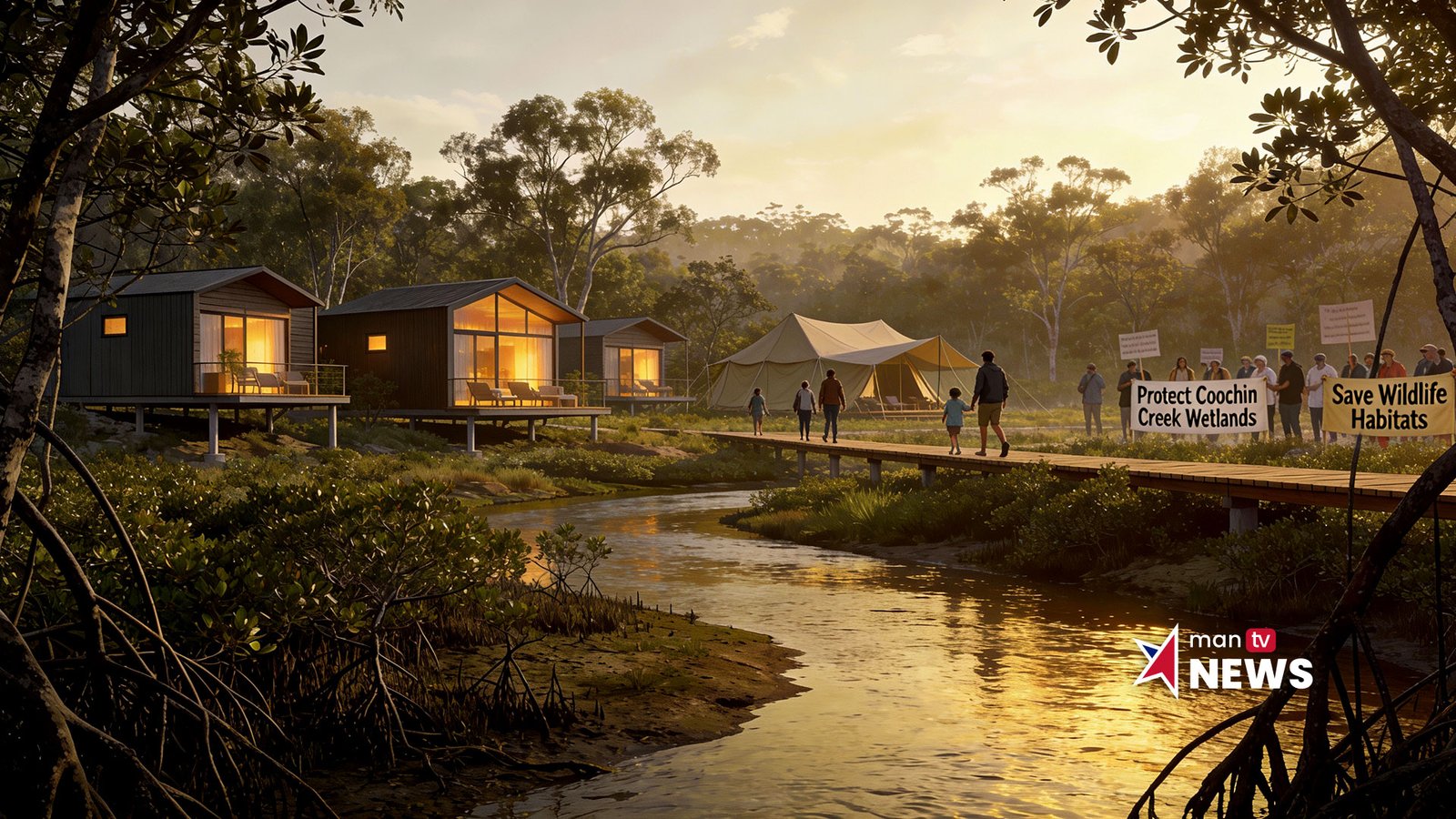
The Crisafulli Government has approved a 150-site ecotourism-style tourist park at Coochin Creek on the Sunshine Coast, pitching it as a job-creating, low‑impact project aligned with its Destination 2045 tourism strategy. The decision has been strongly welcomed by tourism and business groups, but sharply criticised by environmental organisations and some community voices who argue the site is too sensitive and risky for this scale of development.
Flood impact on graziers and towns
- The $35 million Coochin Creek Tourist Park, led by the Comiskey Group, will include 75 cabins and 75 camping or glamping sites on about 42–43 hectares of former farmland at the end of Roys Road, near Caloundra. Facilities are expected to include a pool, water play area, mini‑golf and family‑focused recreation, adding much‑needed accommodation capacity for the Sunshine Coast.
- Deputy Premier and Planning Minister Jarrod Bleijie approved the tourist park after “calling in” the development application, saying the project will boost tourism, create local jobs and “unlock economic opportunities” while operating under strict environmental and safety conditions. The government states the decision aligns with its Destination 2045 strategy, which aims to expand low‑impact, nature‑based tourism in regional Queensland through public–private partnerships.
Support from tourism and business
- Visit Sunshine Coast has hailed the approval as a “huge win”, arguing that the park will deliver much‑needed new beds, strengthen the region’s reputation as an ecotourism destination and diversify local holiday options. The Sunshine Coast Business Council also backs the development, highlighting the Comiskey Group’s track record operating successful tourism venues and predicting strong flow‑on benefits to local operators.
- The local LNP MP for Caloundra, Kendall Morton, has described the project as a “game‑changer” that will showcase the area’s natural assets and support jobs across multiple sectors, from hospitality to small business. Comiskey Group Director David Comiskey says the approval follows a five‑year assessment process and that the park is designed as a family‑friendly, low‑impact destination that leverages experience from the company’s Sandstone Point Holiday Resort.
Environmental and community concerns
- The State Assessment and Referral Agency (SARA), the Queensland government’s own specialist planning body, had previously recommended refusal, finding there was no overriding public need for the development and warning of significant environmental and bushfire risks at the sensitive Coochin Creek and Pumicestone Passage interface. A coalition of Sunshine Coast community groups and the Sunshine Coast Environment Council (SCEC) argue the tourist park is incompatible with the Northern Inter‑Urban Break and could degrade wetlands, wildlife habitat and water quality.
- SCEC’s Narelle McCarthy has labelled the approval “flawed and troubling”, warning that the site effectively extends into wetland and that conditions imposed are “fairly standard” and do not reflect the area’s sensitivity. Community groups also raise safety concerns, noting that evacuating up to 600 people along a single access road during a bushfire or other emergency could be difficult, despite the state’s assurances about fire management plans, firebreaks and road upgrades.
Conditions and next steps
- The tourist park has been approved subject to 95 conditions covering environmental protection, vegetation management, bushfire mitigation, road works and visitor safety, including clearing about 0.6 hectares of vegetation and replanting around 3.3 hectares. The government says these requirements, along with ongoing monitoring, will ensure the project protects key environmental values while opening the area to more visitors.
- A separate proposal by Comiskey Group for a nearby large‑scale music festival site, known as Coochin Fields and capable of hosting tens of thousands of people at several events each year, is still under consideration and remains strongly opposed by local environment and resident groups. Those groups have signalled they will continue campaigning against high‑impact development at Coochin Creek and are urging the state to heed its own expert advice on future decisions.


 English