






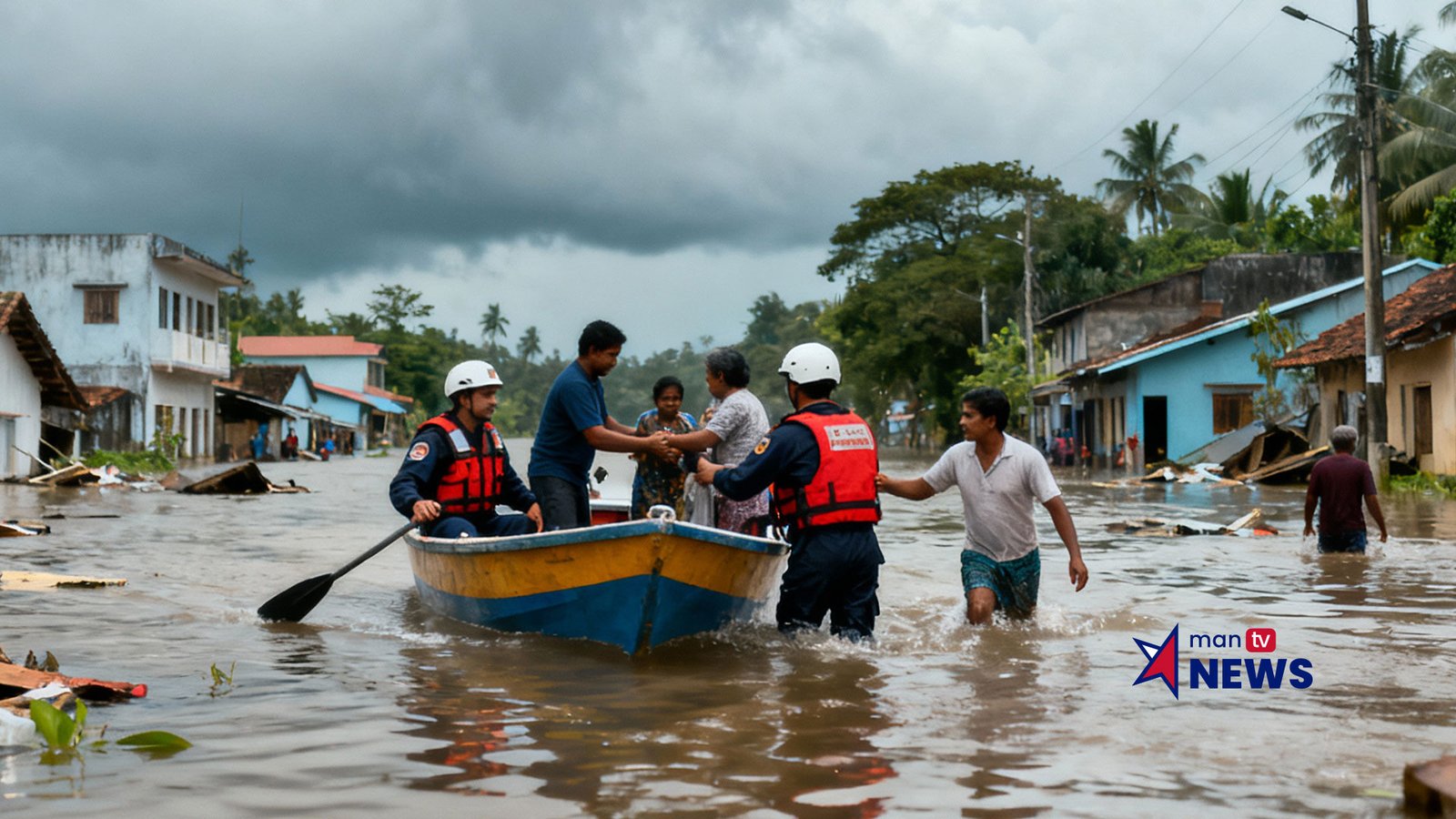
Catastrophic Cyclones Kill 1,338 Across South and Southeast Asia, Cause $20+ Billion in Damages
A rare convergence of tropical cyclones has unleashed unprecedented devastation across South and Southeast Asia, killing at least 1,338 people and causing over $20 billion in economic damage since November 26, 2025, according to government and United Nations reports.
The disaster complex—driven by Cyclone Ditwah in the Bay of Bengal and Cyclone Senyar in the Malacca Strait—has affected more than 8.7 million people across four countries, with rescue workers warning the death toll could rise significantly as floodwaters recede and teams reach isolated communities.
Sri Lanka: Nation’s Worst Disaster in 20 Years
Cyclone Ditwah slammed into Sri Lanka’s eastern coast on November 28, triggering catastrophic flooding and landslides in all 25 districts, making it the most widespread disaster in the country’s recent history. The death toll has climbed to 410 confirmed fatalities, with 336 people still missing as of December 2.
“This is the largest and most daunting natural catastrophe in our history,” President Anura Kumara Dissanayake told parliament after declaring a national emergency.
The central hill-country districts suffered the heaviest casualties, with Kandy reporting 88 deaths and 150 missing persons. Nearly 1.5 million people have been affected, including 233,000 displaced residents sheltering in 1,441 temporary camps. Infrastructure damage includes 565 houses completely destroyed, 20,271 partially damaged, 10 bridges rendered unusable, and over 200 roads impassable.
Total economic losses are estimated between Rs. 210-320 billion ($0.7-1.0 billion), delivering another devastating blow as the nation struggles to recover from its 2022 economic crisis.
International aid teams from India, Pakistan, Bangladesh, and Japan have arrived to assist overwhelmed local authorities, while the United Nations has deployed emergency response specialists.
Indonesia: Sumatra Island Devastated
Indonesia has suffered the highest confirmed death toll at 744 people, with 551 still missing after catastrophic flash floods and landslides swept across Sumatra island. The disaster has displaced 300,000 people and affected 3.3 million overall.
North Sumatra province experienced the worst devastation, with entire villages buried under mudslides and critical infrastructure completely destroyed. Military helicopters and warships continue rescue operations in isolated communities where roads and bridges have vanished.
The economic impact is projected at 68.67 trillion rupiah ($4.13 billion), according to Indonesia’s National Disaster Management Agency. Beyond immediate damage, officials have raised concerns that millions of cubic meters of timber swept away by floodwaters may indicate illegal logging activities exacerbated the disaster’s severity.
Thailand: Historic Flooding Paralyzes South
Southern Thailand faces its most severe flood damage in recorded history, with 181 confirmed deaths and 3.9 million people affected across eight provinces. The commercial hub of Hat Yai recorded 335mm of rainfall in a single day on November 21—its highest in 300 years.
The floods have inflicted 500 billion baht ($15.6 billion) in economic damage, according to Thailand’s National Economic and Social Development Council. Losses include 100,000 vehicles destroyed, 800,000 households with serious damage, and extensive destruction of rubber and oil palm plantations across 400,000 rai (64,000 hectares).
The disaster has disrupted preparations for the SEA Games, scheduled to begin in the region on December 9, and paralyzed key industrial hubs vital to global tech and automotive supply chains.
Water services have been partially restored, but many areas remain submerged, and authorities caution that additional rainfall could worsen the crisis.
Malaysia and Regional Impact
Malaysia’s northern states experienced flooding that killed three people and displaced approximately 34,000 residents. Over 6,200 Thai citizens have evacuated into Malaysia, with thousands remaining in temporary shelters.
The UN World Health Organization has warned of escalating health risks from contaminated water supplies and deepening food insecurity as floodwaters recede across all affected nations.
Unprecedented Meteorological Event
The disaster began when Cyclone Senyar formed in the Malacca Strait on November 26—the second documented cyclone in that location since 2001. This rare event coincided with Cyclone Ditwah developing over the Bay of Bengal, creating a convergence zone that amplified the northeast monsoon and generated record-breaking rainfall across the region.
Climate scientists note that while tropical cyclones are not uncommon, the simultaneous formation of two powerful systems affecting such a wide geographic area represents an extremely rare meteorological pattern.
The UN World Health Organization has warned of escalating health risks from contaminated water supplies and deepening food insecurity as floodwaters recede across all affected nations.
Outlook and Ongoing Response
Rescue operations continue across all affected countries, though damaged infrastructure and ongoing weather hazards hamper relief efforts. Health officials warn that casualty figures are likely to rise as waters recede and teams reach previously inaccessible areas.
The UN Secretary-General has expressed condolences and confirmed the organization stands ready to support relief efforts, while humanitarian agencies scale up emergency food, water, and medical assistance.
With recovery expected to take months and cost billions, the disaster has exposed vulnerabilities in disaster preparedness across the region, prompting calls for enhanced early warning systems and climate resilience infrastructure.
Reporting Note: This article is based on official government reports, United Nations updates, and verified international news sources. All figures are current as of December 3, 2025, unless otherwise specified. Death tolls and damage estimates are expected to be updated as rescue and assessment operations continue.


 English