






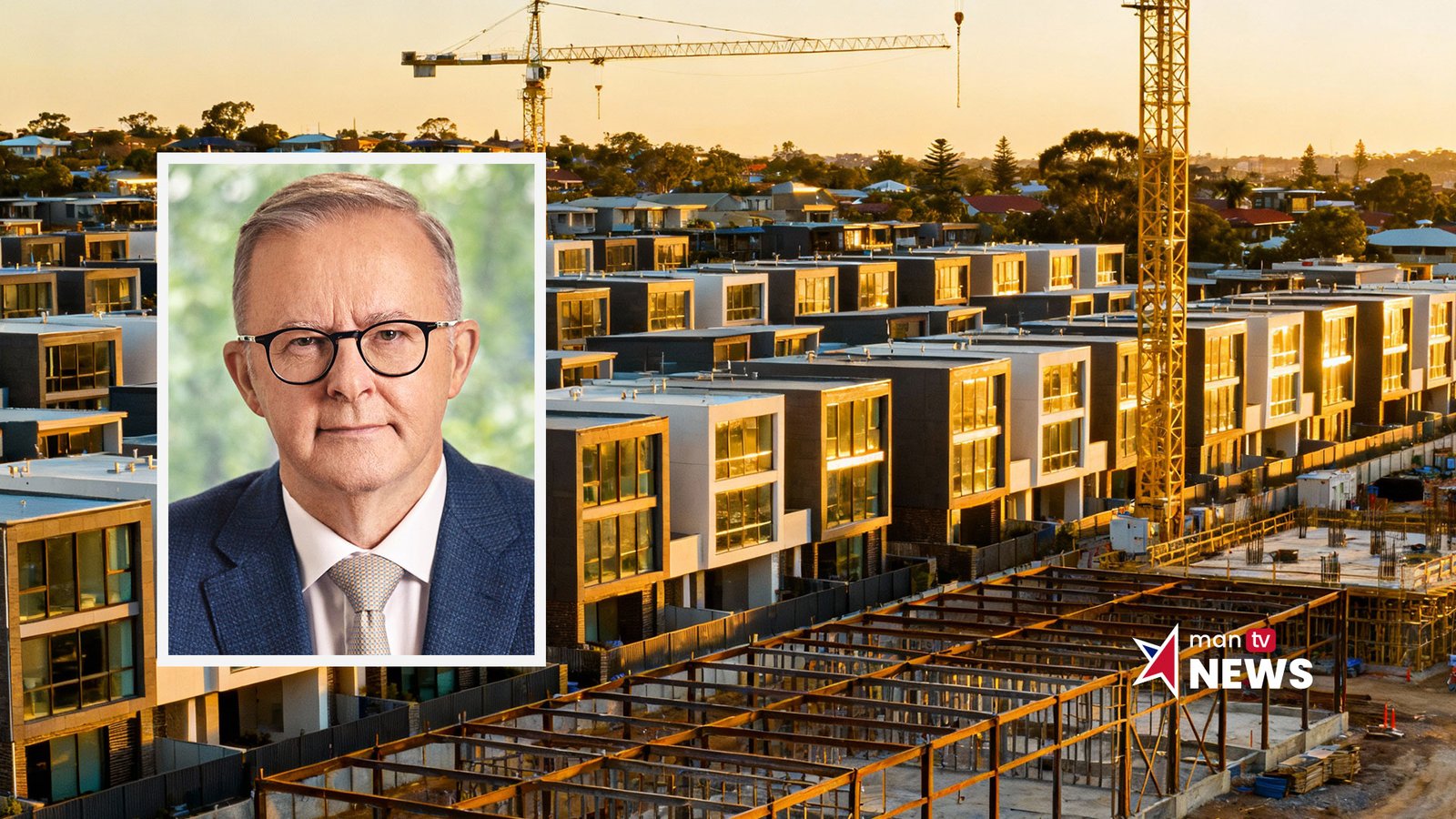
Albanese’s 1.2 Million Homes Target Falls Short as Population Surge Outstrips Supply
The government’s flagship housing policy is failing to keep pace with demographic reality, industry figures warn, threatening to deepen Australia’s affordability crisis ahead of a looming federal election.
The Albanese government’s centrepiece housing pledge—to deliver 1.2 million new homes by 2029—is already obsolete, according to peak industry body warnings that will intensify political pressure on Labor’s economic credentials.
Fresh analysis from the Housing Industry Association reveals the target, unveiled with fanfare just two years ago, has been overtaken by accelerating population growth that renders the commitment inadequate before a single additional dwelling reaches fruition.
The findings deliver an unwelcome blow to a government banking on housing policy to neutralise Coalition attacks on cost-of-living pressures. HIA economists now project the nation requires 1.9 million new homes to restore affordability to median income earners—a shortfall of 700,000 dwellings that threatens to leave the government exposed on a defining electoral issue.
With national median house prices surging to $773,803—demanding 1.7 times the average salary to service mortgage repayments—home ownership is slipping further from reach for working Australians, particularly younger voters Labor cannot afford to alienate.
The political headache deepens with HIA projections suggesting the government will miss its own target by nearly 200,000 homes, undermining ministerial assurances the policy would arrest spiralling prices.
Senior HIA economist Tom Devitt attributes the policy failure to underestimated migration figures, with net overseas arrivals reaching 423,000 in the year to March 2025—well above Treasury forecasts that underpinned the original housing commitment.
The mathematics are stark: even achieving the 240,000 annual dwelling construction rate required to meet the 1.2 million target would merely stabilise the crisis, not reverse it. Current trajectories suggest completion could stretch to 2035, beyond two electoral cycles.
State responses have fractured along familiar partisan lines. Western Australia’s Cook Labor government is accelerating approvals, while New South Wales Liberal-National coalition has unveiled apartment construction incentives. Yet the critical eastern seaboard markets of Sydney and Melbourne—where housing stress
is most acute—are falling behind, storing up problems for whichever party holds power federally.
The housing shortfall threatens to cascade into related policy failures: strained infrastructure in regional centres absorbing overflow demand, declining urban amenity as density increases without planning, and widening wealth inequality that entrenches generational disadvantage.
Industry groups are intensifying lobbying for structural tax reform, particularly abolition or reduction of state-imposed stamp duties and land taxes they argue throttle supply. Federal Treasurer Jim Chalmers faces competing pressures to intervene while managing inflationary pressures and a deteriorating budget position.
With the opposition seizing on cost-of-living vulnerabilities and minor parties pushing more aggressive interventions, housing has crystallised as the policy battleground that could determine the next election.
The consensus among housing economists is unambiguous: without dramatic policy recalibration—potentially including controversial measures such as planning deregulation, developer incentives, or direct government construction—Australia’s home ownership crisis will intensify, with profound consequences for social cohesion and political stability.


 English